
Home » Installation
Category Archives: Installation
The bass pipes are all in!
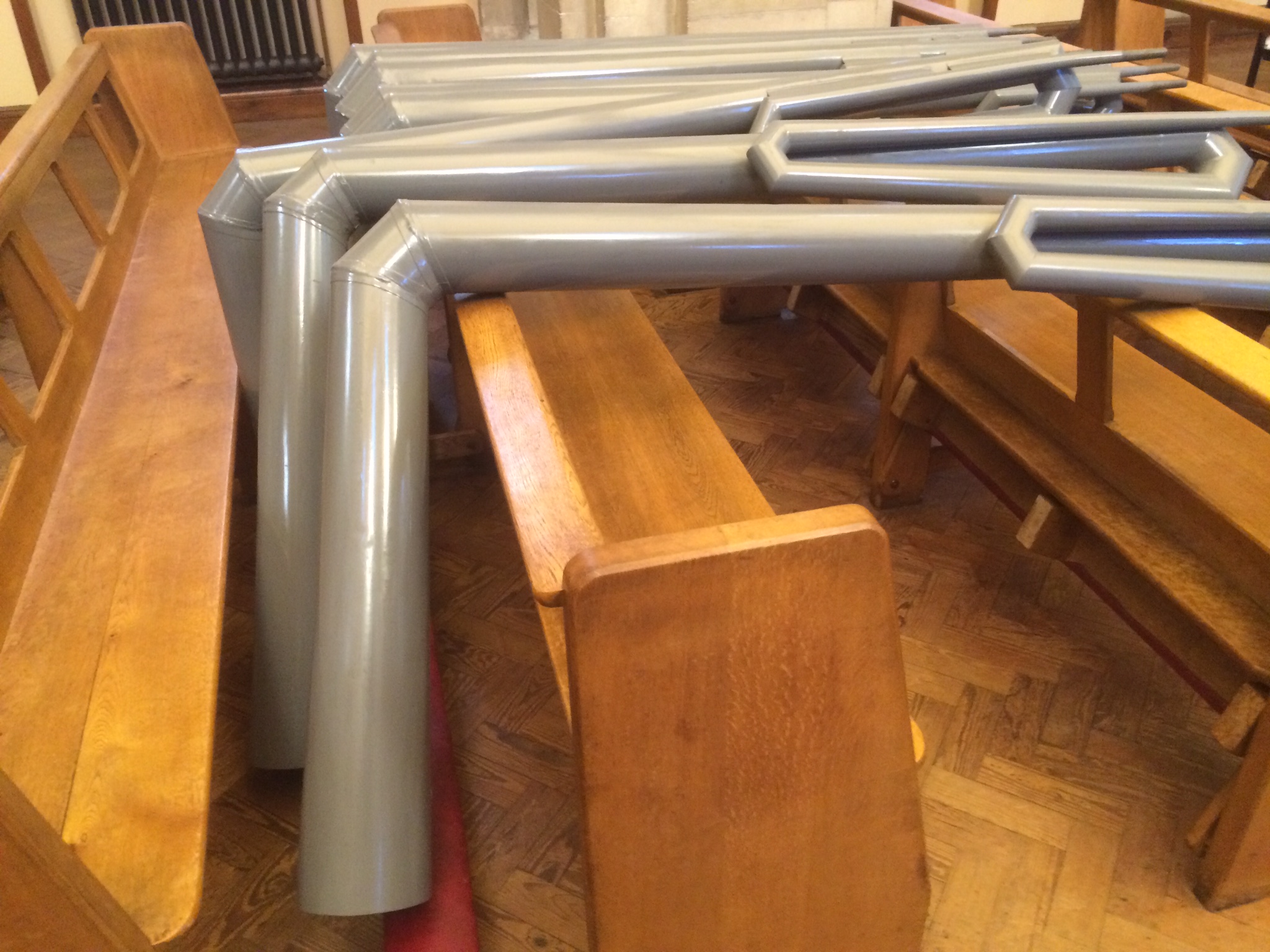
The refurbished Pedal Trombone pipes
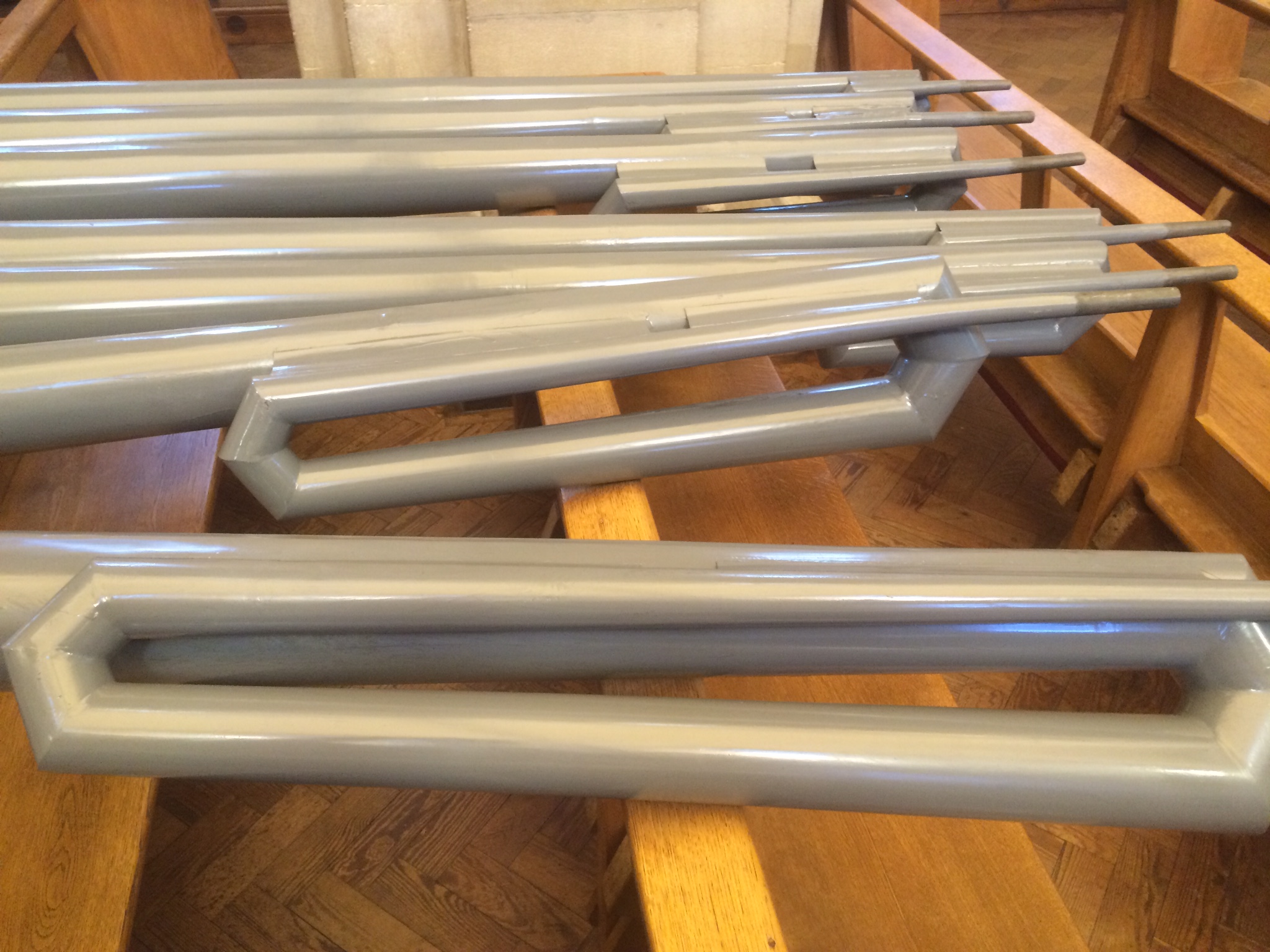
Pedal Trombone pipes (“bugled” to fit the organ case)
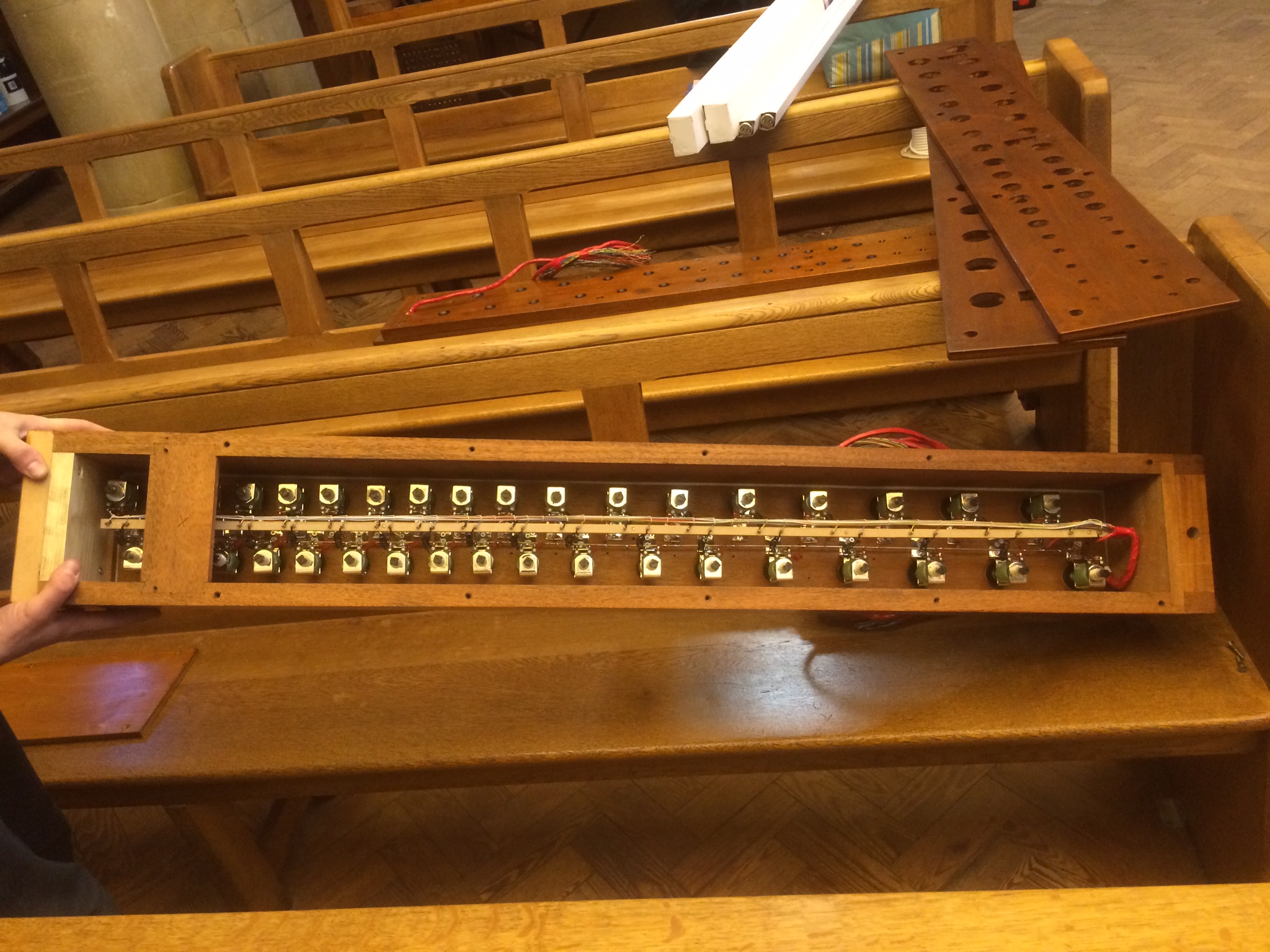
Part of the refurbished Trumpet soundboard from the old All Souls organ
The refurbished 16′ pedal trombone pipes arrived yesterday, together with their rebuilt windchest and the refurbished windchests for the rest of the pedal and the great trumpet pipes. Whilst Mat and I applied the first coat of gloss to the inside of the swellbox, Mike and Simon fitted the remaining pedal windchests, the rest of the wooden pedal pipes and the trombone bass pipes (which would all be around 20′ long if they weren’t bent around themselves – “bugled” – to fit in place), together with the extra supports needed to make sure they do not collapse under their own weight. The biggest and most difficult-to-handle pipes are now all in place.
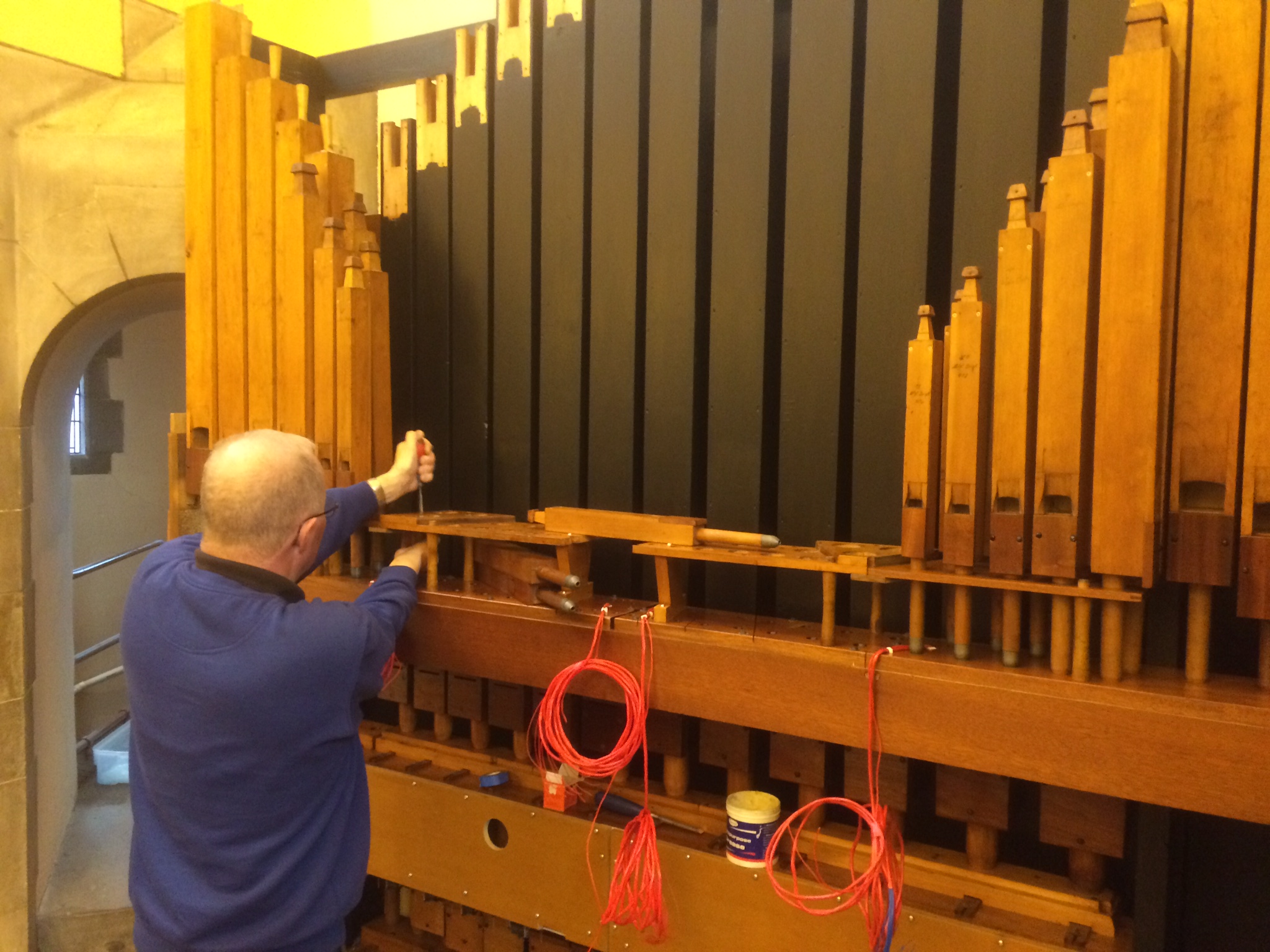
Mike Thompson fitting pedal flute pipes on to the refurbished pedal soundboards
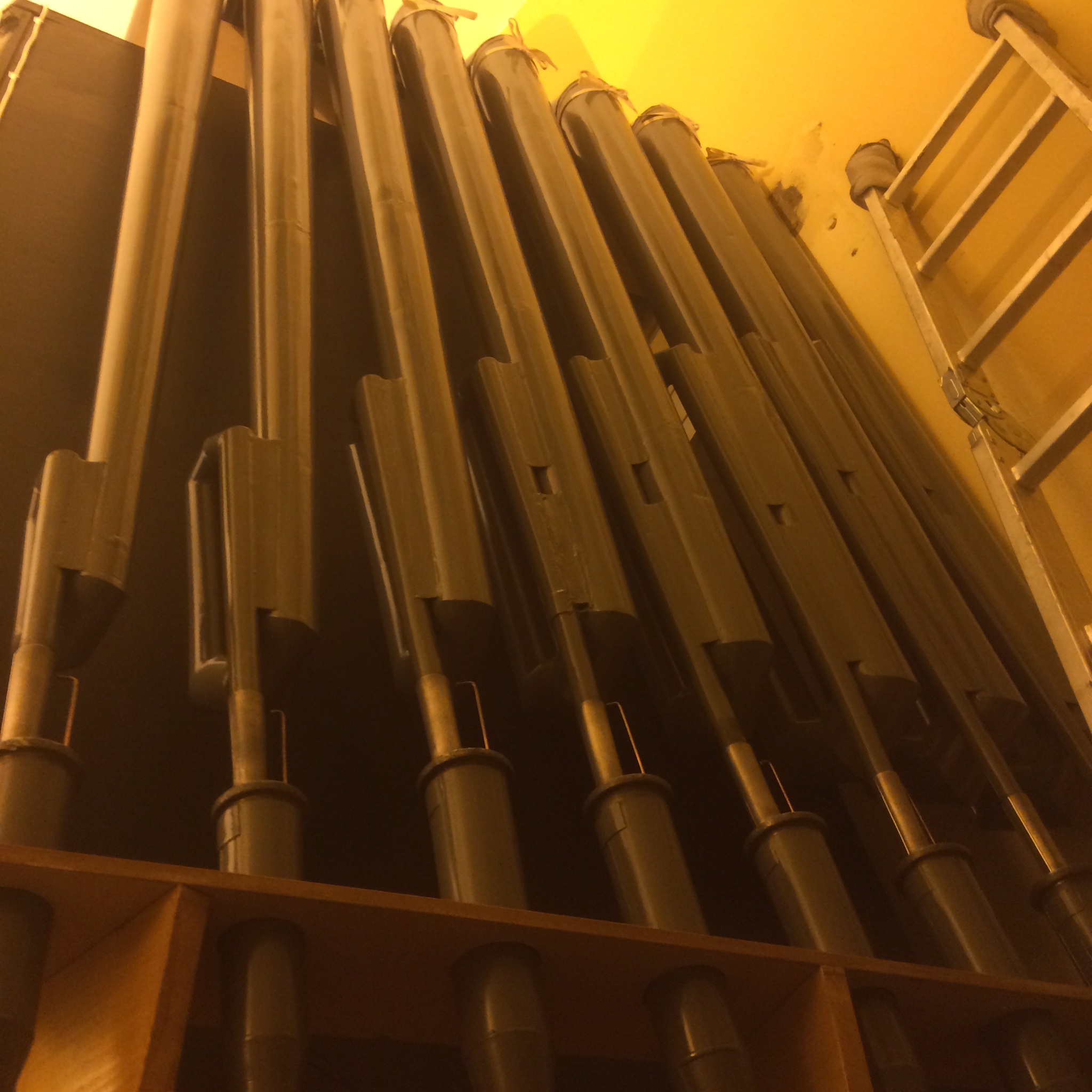
Pedal 16′ Trombone pipes now fitted
More hard labour!
I spent large parts of last weekend undercoating the inside of the swellbox – which needed three coats to ensure minimal sound absorption within the box and outward projection of the sound from the pipes. Once the inside has been glossed, the swell pipes (which are all ready to be fitted) can be installed.
First onsite work of the New Year
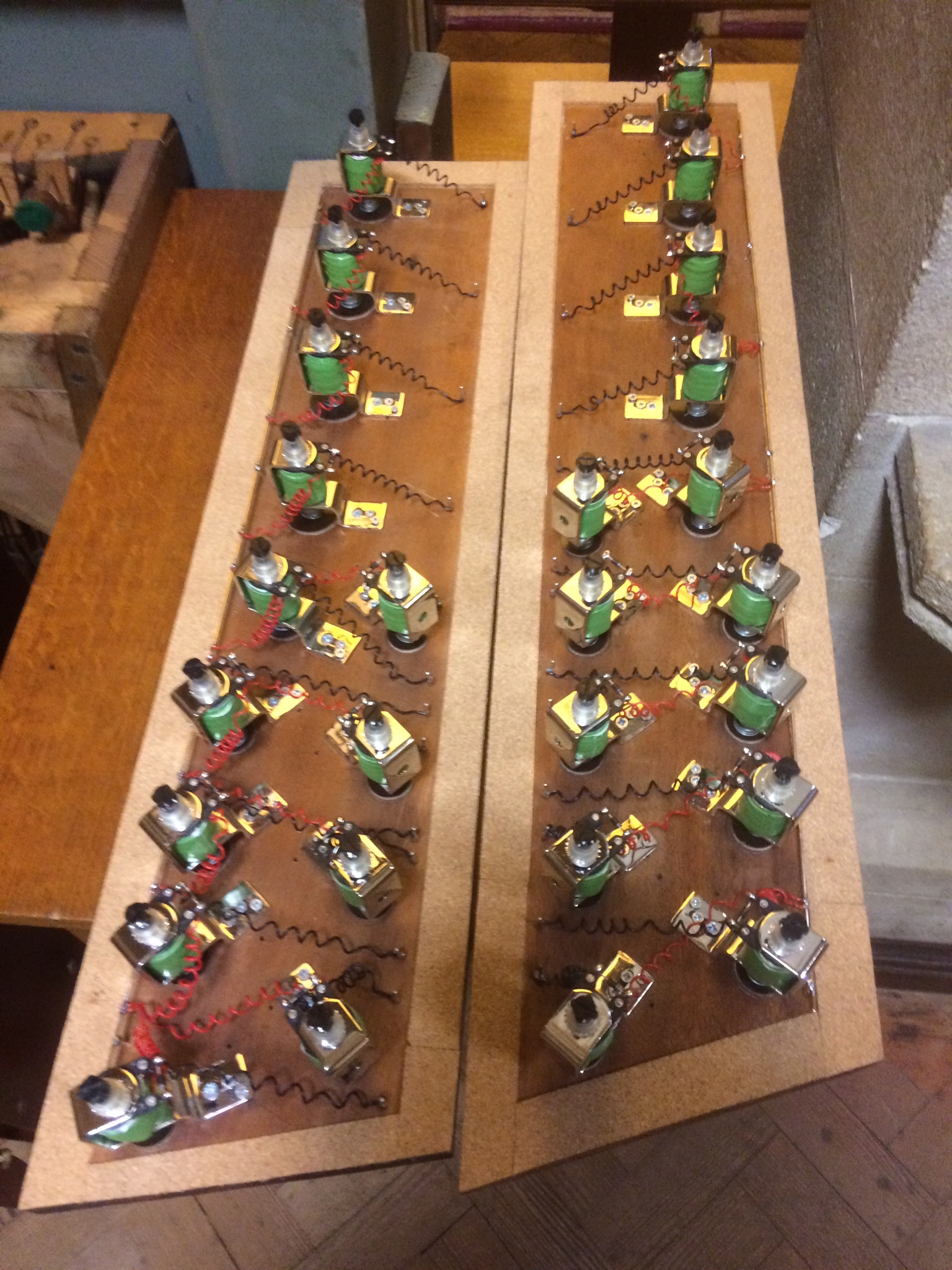
New magnets for the Bourdon Windchest
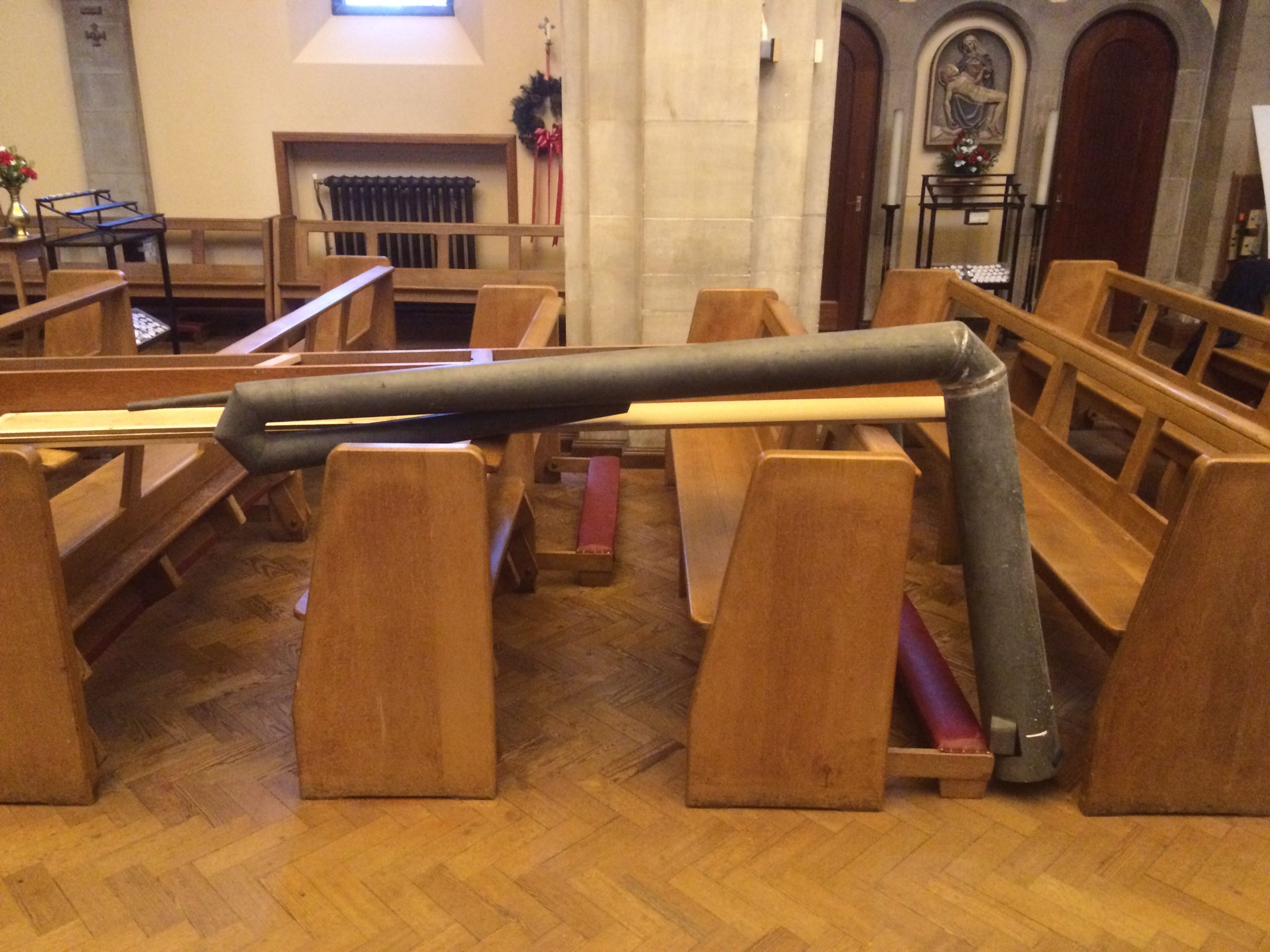
Pedal trombone 16′ pipe – it would be 20′ long if unmitred!
The four longest pipes of the Swell Violin Diapason 8′ Stop, at between 8′ and 9′ high, were too tall to fit in the refurbished All Souls swellbox (which we used because it was wider than the Nelson swellbox and fitted in the old organ case, which we are preserving), so, as part of their refurbishment, they have been ‘mitred’ (bent over at the top to fit in) in the M C Thompson workshop and yesterday they were fitted in the swellbox. In addition, the pedal principal pipes were completed and painted, the rest of the pedal bass pipes (for the soft 16′ Bourdon) were fitted into their new wind chest behind the swellbox, and the pipes of the Pedal 16′ Trombone were checked out for fit before they are refurbished.
The Nelson ‘Closed Horn’ pipes have been refurbished and altered to become the new Swell Cornopean 8′ stop (a sort of bright, but soft trumpet) and have been brought to church. The old All Souls wooden flute pipes have also been refurbished and are back ready to be installed as part of the new pedal pipework.
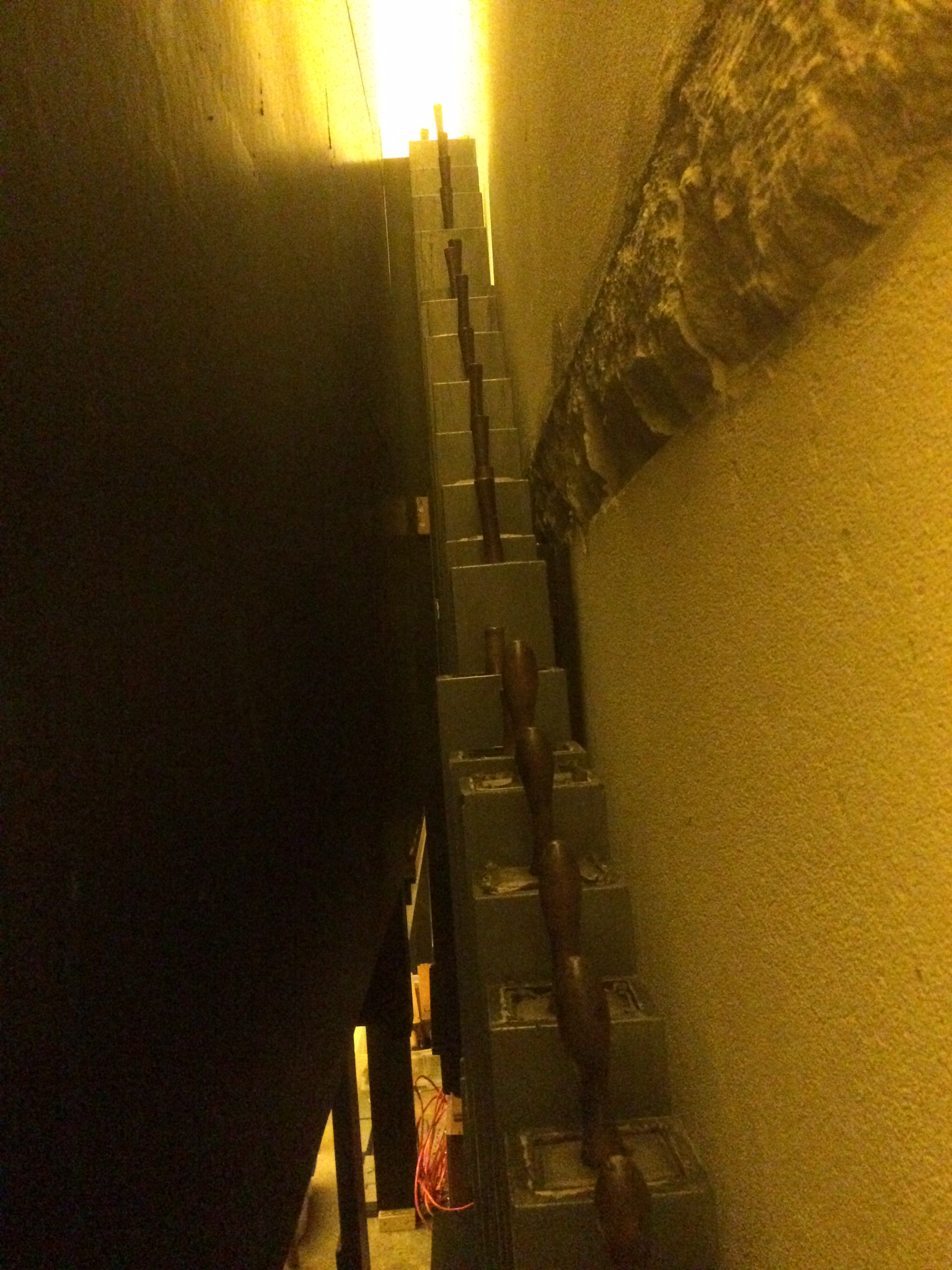
Soft 16′ Bourdon pipes behind the Swellbox

New magnets on the swell wind chest (you can see the pedal 16′ soft bourdon pipes underneath)
More work in Church
Over Christmas I finished painting the outside of the top sections of the Swellbox, and on 31 December Mike and his team arrived to finish building it. They also fitted the bottom Pipes of the Pedal Principal rank in front of the Subbass pipes and fitted a completely new windchest behind the Swellbox, which will take the bottom octave of the refurbished 16′ Bourdon stop. This will provide us with a soft bass sound for accompanying cantors and quiet choir items (our old bass was much too loud for this). Emily and I now have more painting to do whilst the next sections are being built in the workshop.
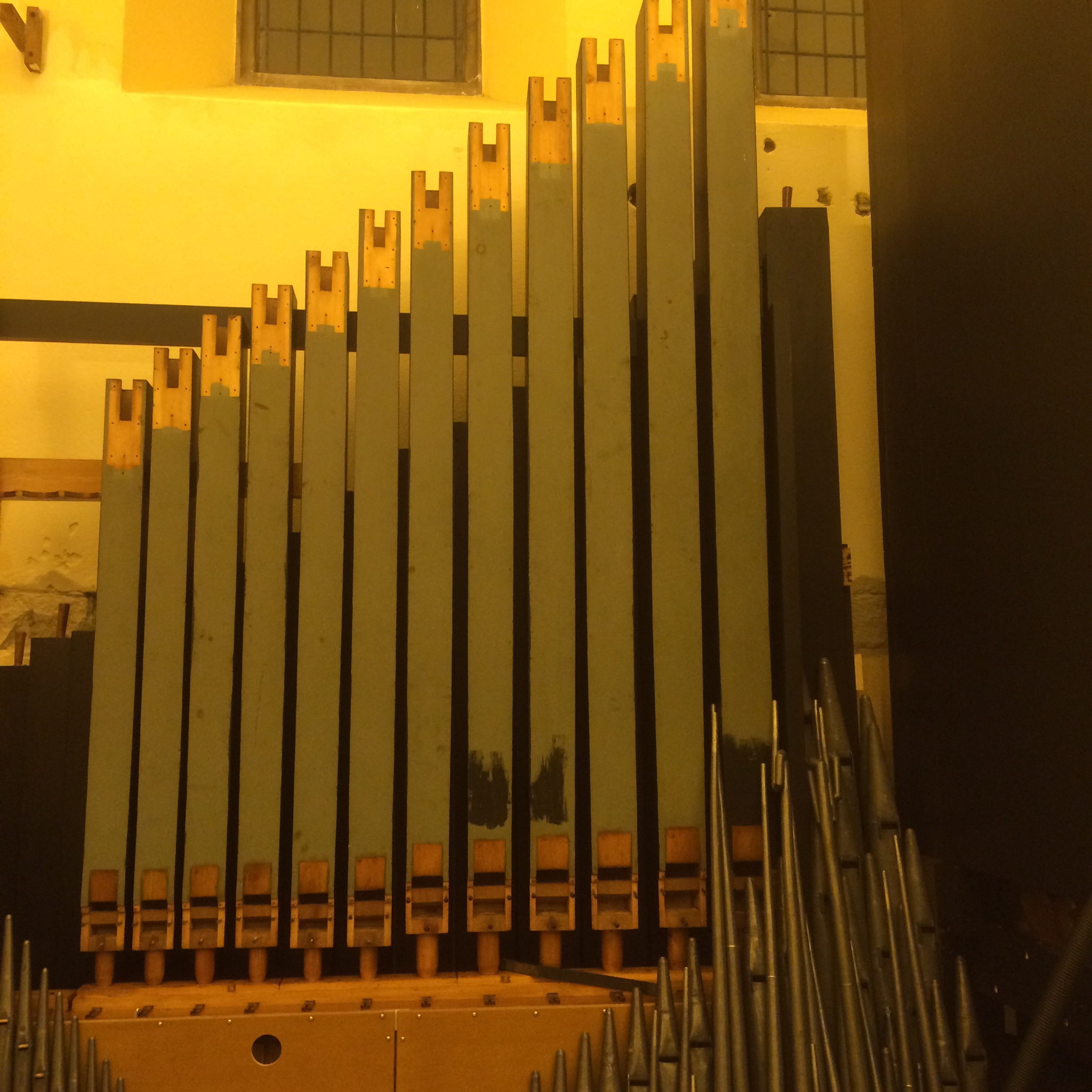
Refurbished pedal principal pipes installed and awaiting final painting
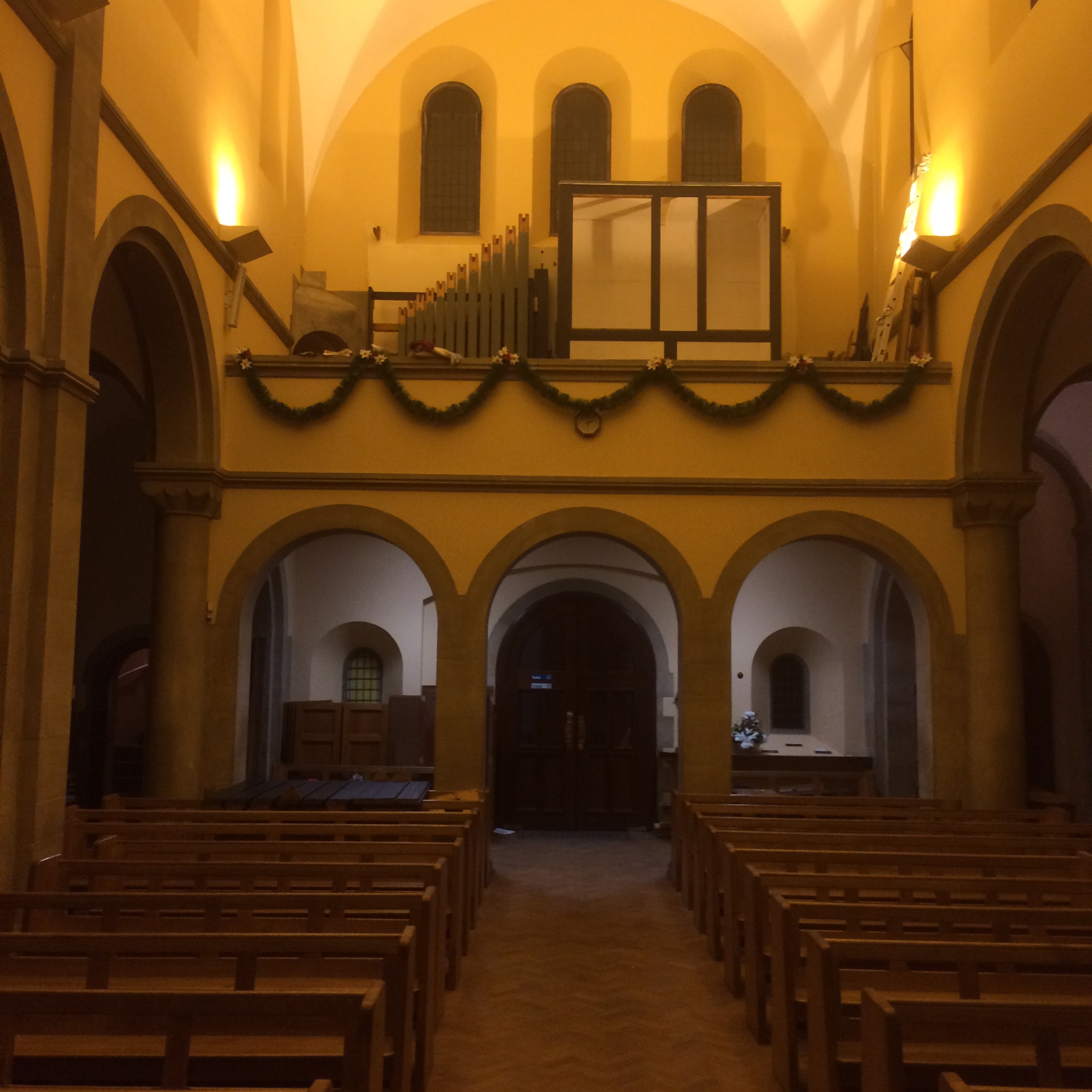
From a distance (you’ll never see this view once it’s finished!)
Problem solved!
Over Christmas 2014 Simon Tipping remembered seeing some wooden principal pipes in part of the “condemned” Bloxwich organ. Mike and Simon went over to have a look on 27th December. Simon was half right – there were some suitable pipes, but not where he thought they were. They were “liberated” and Mike tested them in his workshop. They were of the right age and almost matched the Nelson pipes, so work started on refurbishing the bottom 6 pipes to complete our Principal rank.
A new problem!
Upon being counted in the workshop it looked as if the bottom 6 wooden pipes of the old Nelson Principal rank were missing. There was no sign of them among the pipework back at church. Eventually we worked it out – they were never put in in the first place! Instead, the Principal rank “borrowed” the bottom 6 pipes of the Flute rank. This rank is a fundamental part of the new organ, so we now need to find 6 pipes from somewhere that will match the rest of the Principal rank and finally complete it – over 100 years after it was first made!
Construction begins!
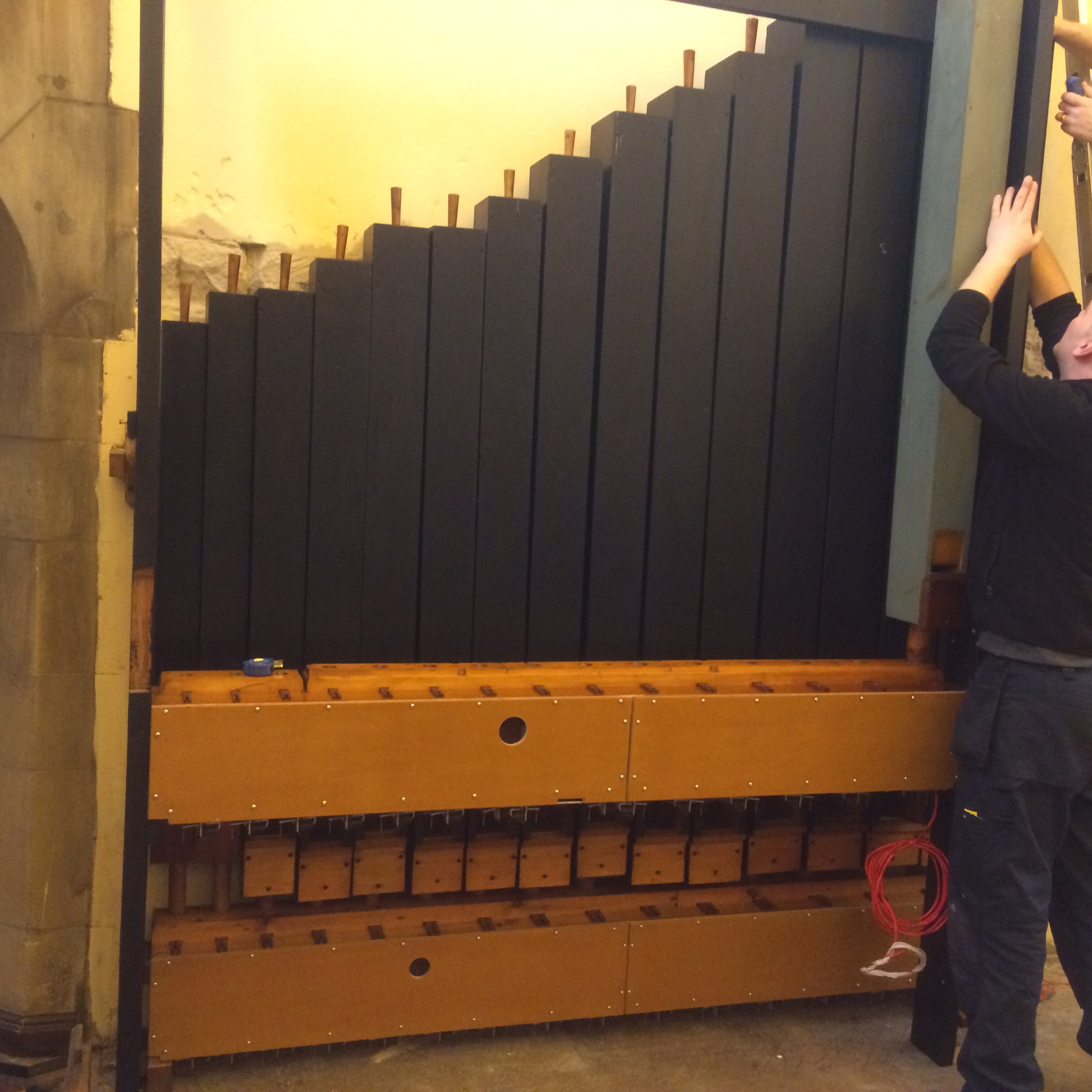
The refurbished bottom notes of the 16′ Pedal Subbass fitted onto their rebuilt windchest

Checking the 8′ Pedal Principal for fit before refurbishing and refitting after Christmas
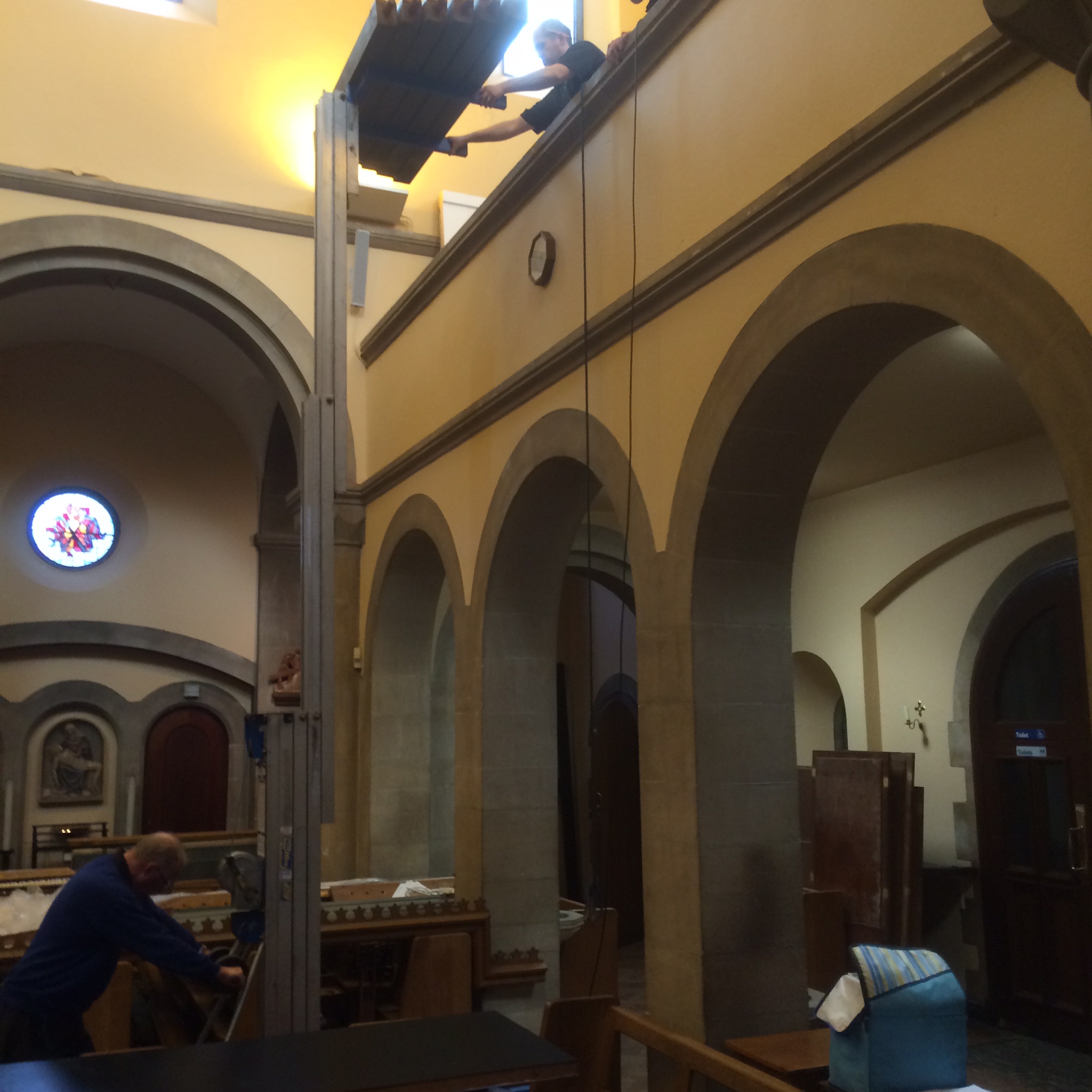
Lifting the pipes for the Swell divisions on to the gallery
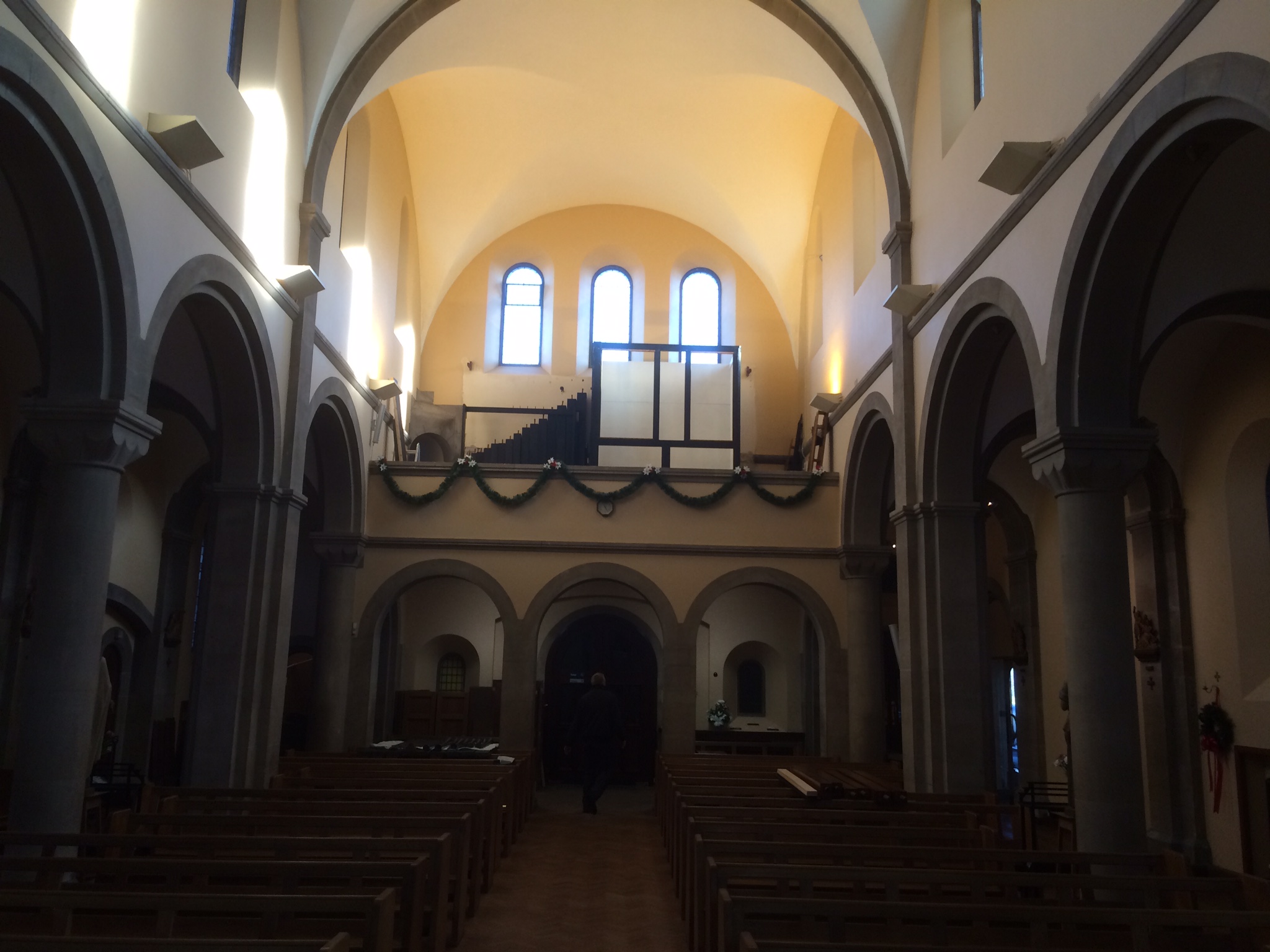
The completed bottom Ocatve of the Pedal 16′ Subbass and the shell of the Swellbox in place
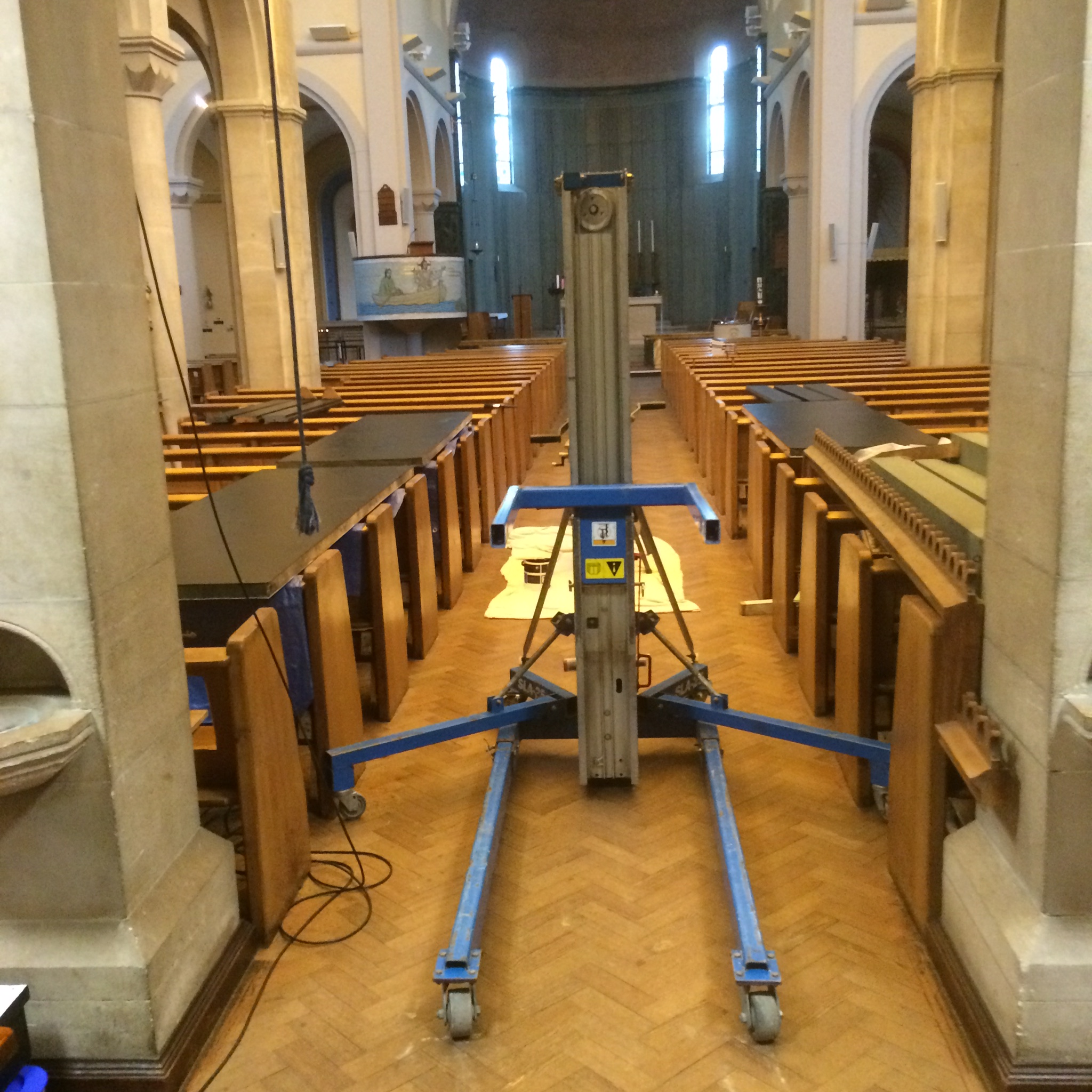
The genie lift ready to start lifting the swell box sections (on top of the benches behind it)
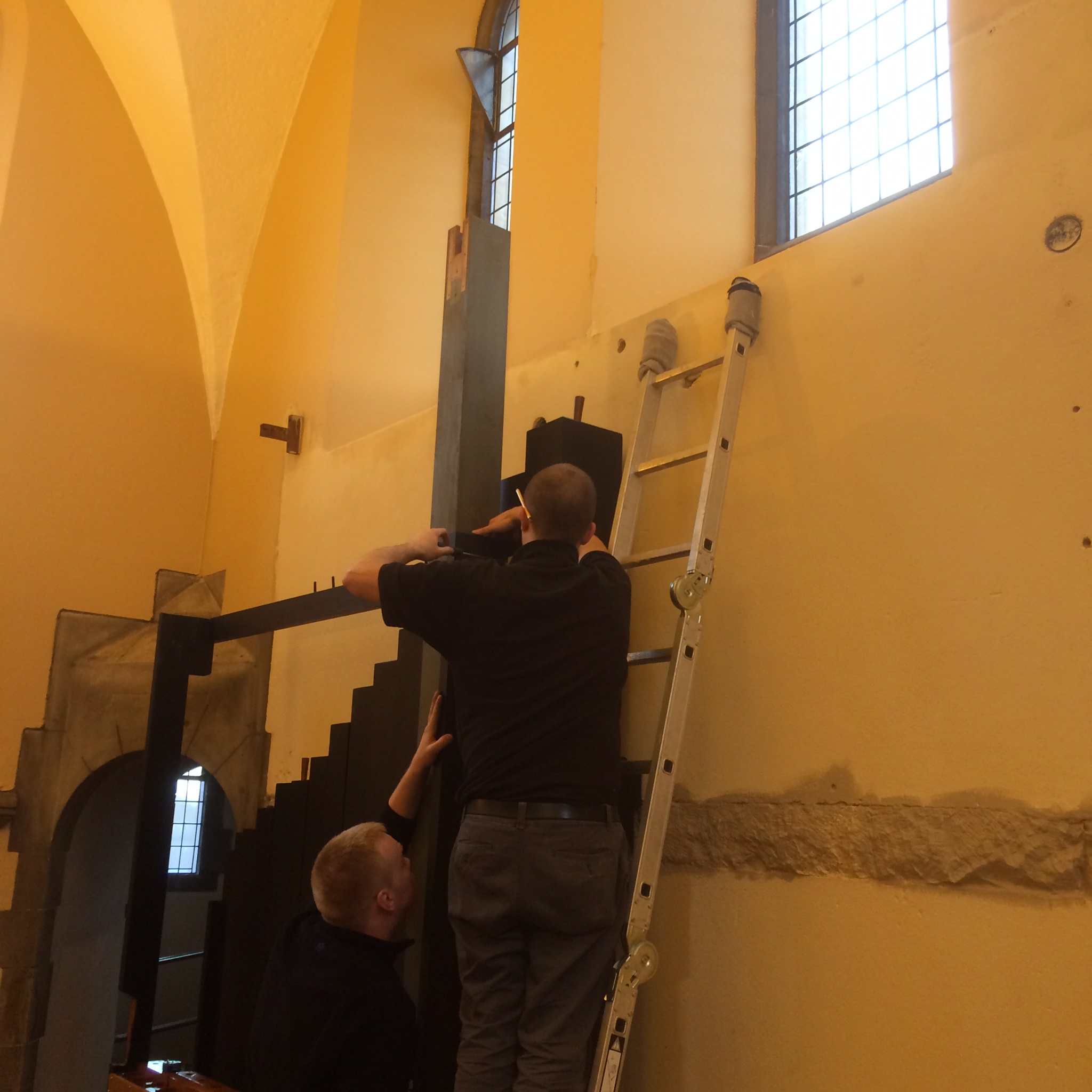
Fixing the pedal framework
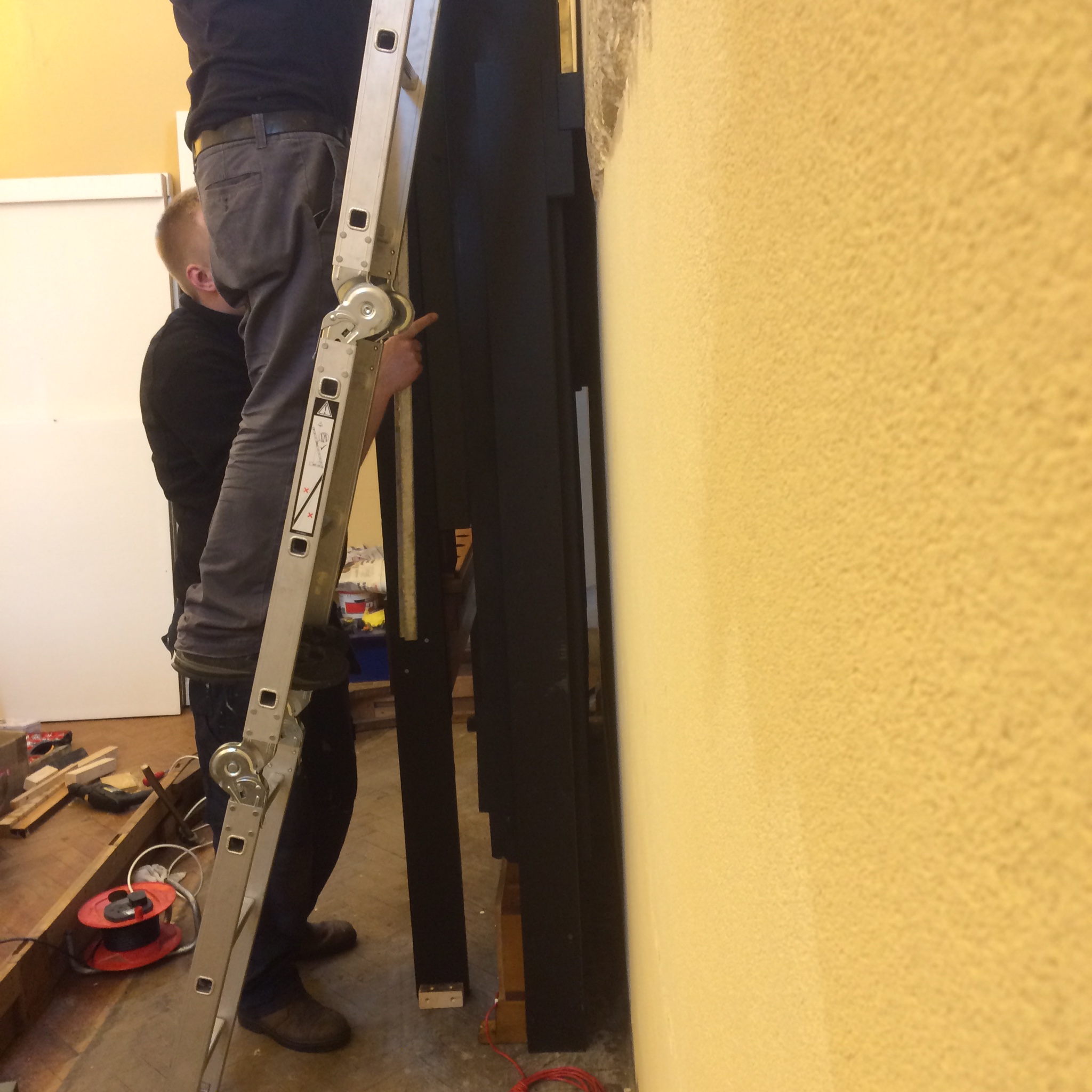
Fitting pedal pipes
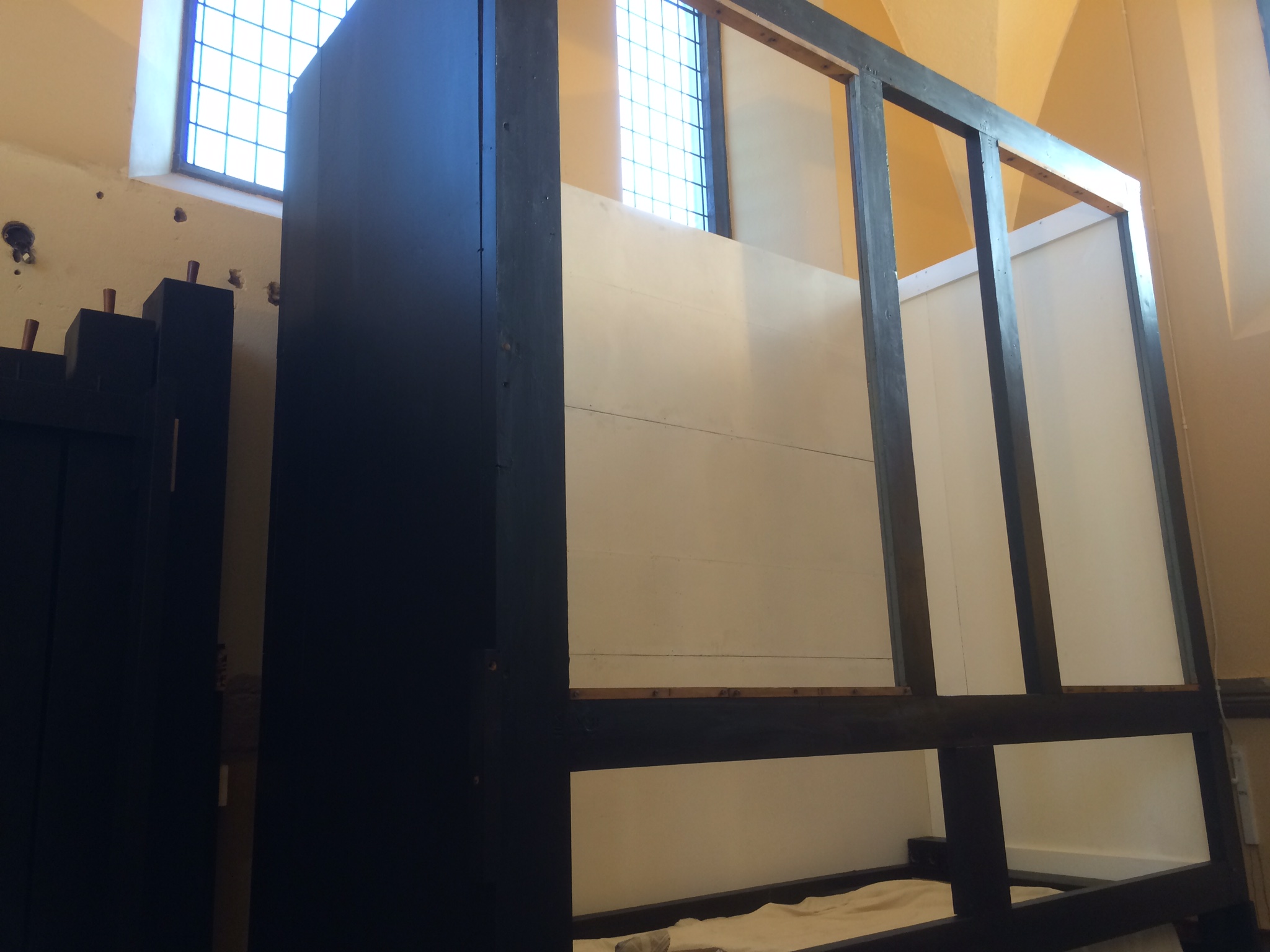
The shell of the swell box awaiting its roof, front doors and final painting before the pipes are installed
The hoist arrived from HSS Tool Hire at 8.15am yesterday (18th December) and Emily and I applied the last coats of paint to the rear sections of the Swellbox in readiness for its rebuilding. The team from Thompsons arrived at 11am with the new swell division (apart from its new Bassoon pipes) and other parts that had been built in the workshop.
By 1pm the pedal bass and principal windchests were fixed in place on the back wall and the bottom pipes of the Pedal 16′ Subbass were fitted. Later in the day the Swellbox side, front and rear sections were lifted into place and built on to its frame, the Swell windchest was hoisted into place inside it, and the Swell pipes were lifted onto the gallery.
Once the swellbox roof is fitted the whole swellbox will receive its final coats of paint, and be ready for its pipes to be installed and the refurbished swell doors to be fitted on the front.
The organ is heard for the first time!
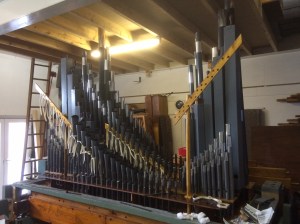
The Swell wind chest and soundboard built up in the workshop ready to be played for the first time
I visited the workshop on 17th December to look at and hear the Swell division before it is dismantled and packed for installation in church. After a bit of tuning it sounds really promising – even though the various sounds have not yet been blended together properly and the mixture ‘screams’ a bit because it has not yet been adjusted to operate on 3.2″ of wind pressure instead of its original 2.5″. This section and all of its pipes will be fitted into the swellbox when that is remade.
More work onsite
The organ builders are back to refurbish the large wooden pedal subbass pipes ‘on site’ (some of which are 9’ long!), cleaning them with compressed air, cleaning, polishing and re-greasing the tuning stoppers that fit in the top of the pipes, all ready for repainting.
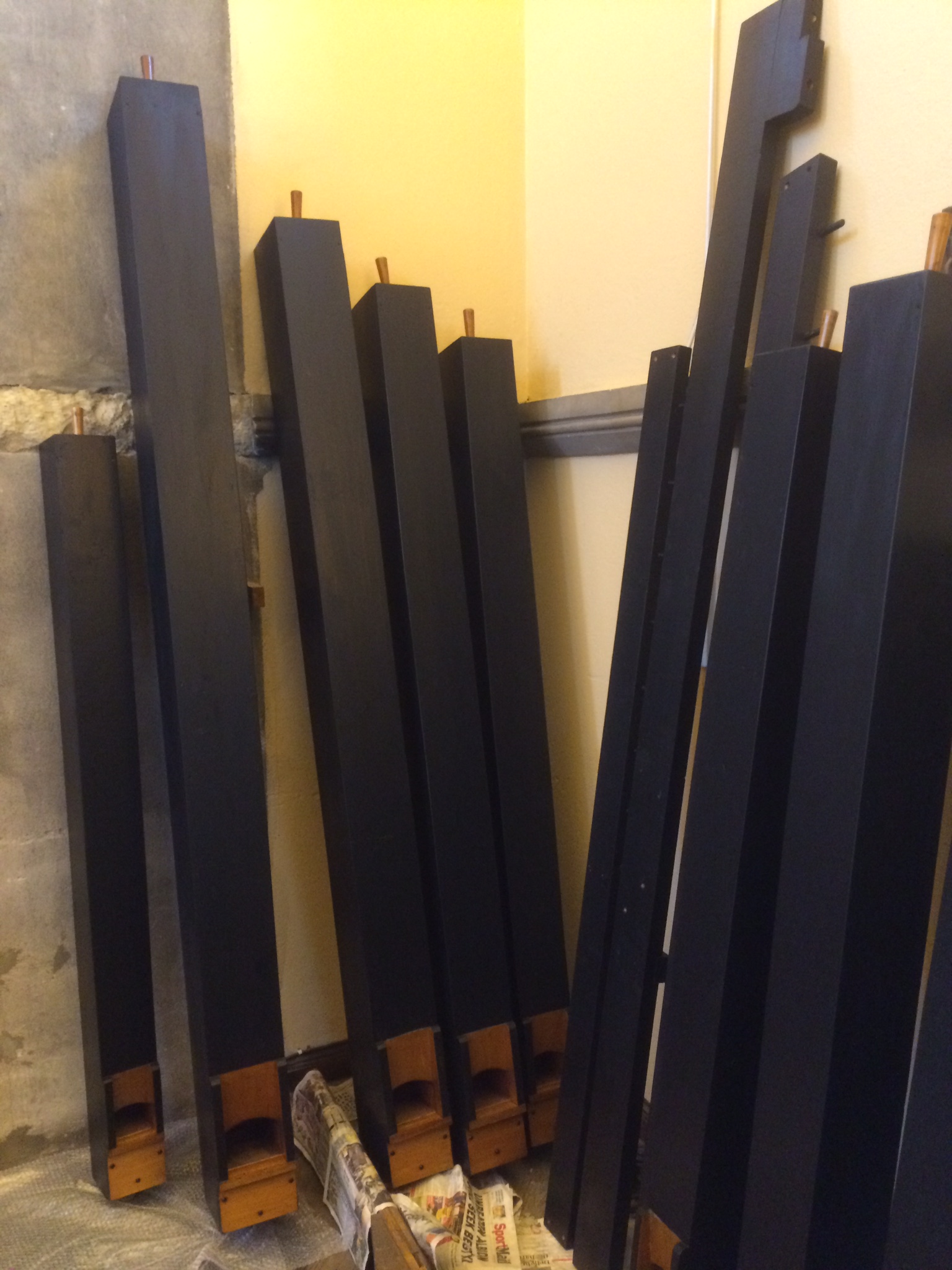
Refurbished Pedal 16′ Subbass pipes refurbished and painted
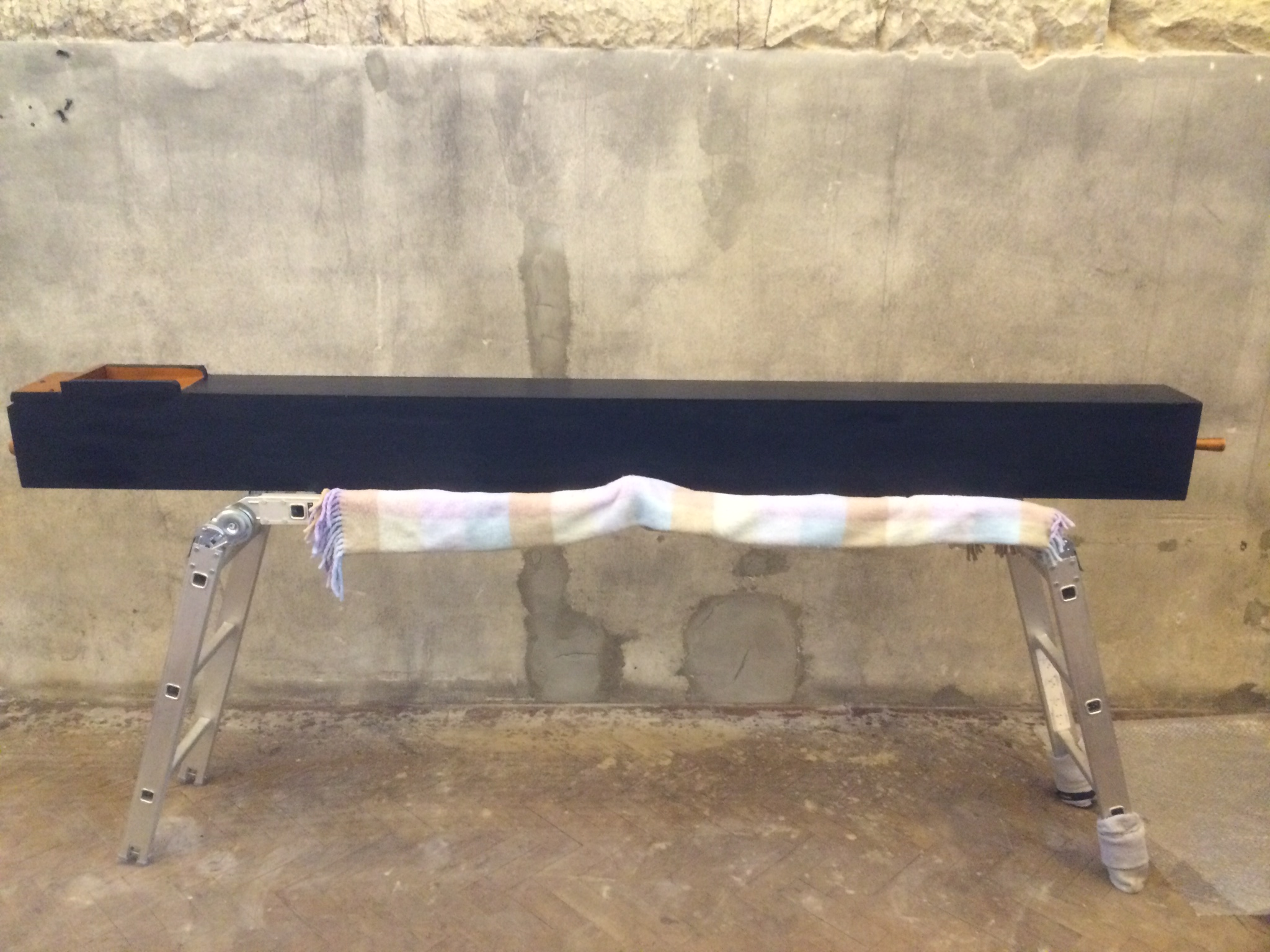
The biggest pipe so far all done and ready to be fitted!
A flurry of activity!
At All Souls – the rear wall is sealed by me before being painted over by volunteers from the parish.
In the workshop – the Swell division’s windchest and soundboard are rebuilt and the pipes are refurbished and fitted with new tuning slides (metal sleeves which are moved up and down the top of a pipe to tune it). The windchests for the pedal bass pipes are being remade completely (they could not be refurbished – they were originally so poorly made that they leaked wind very badly).
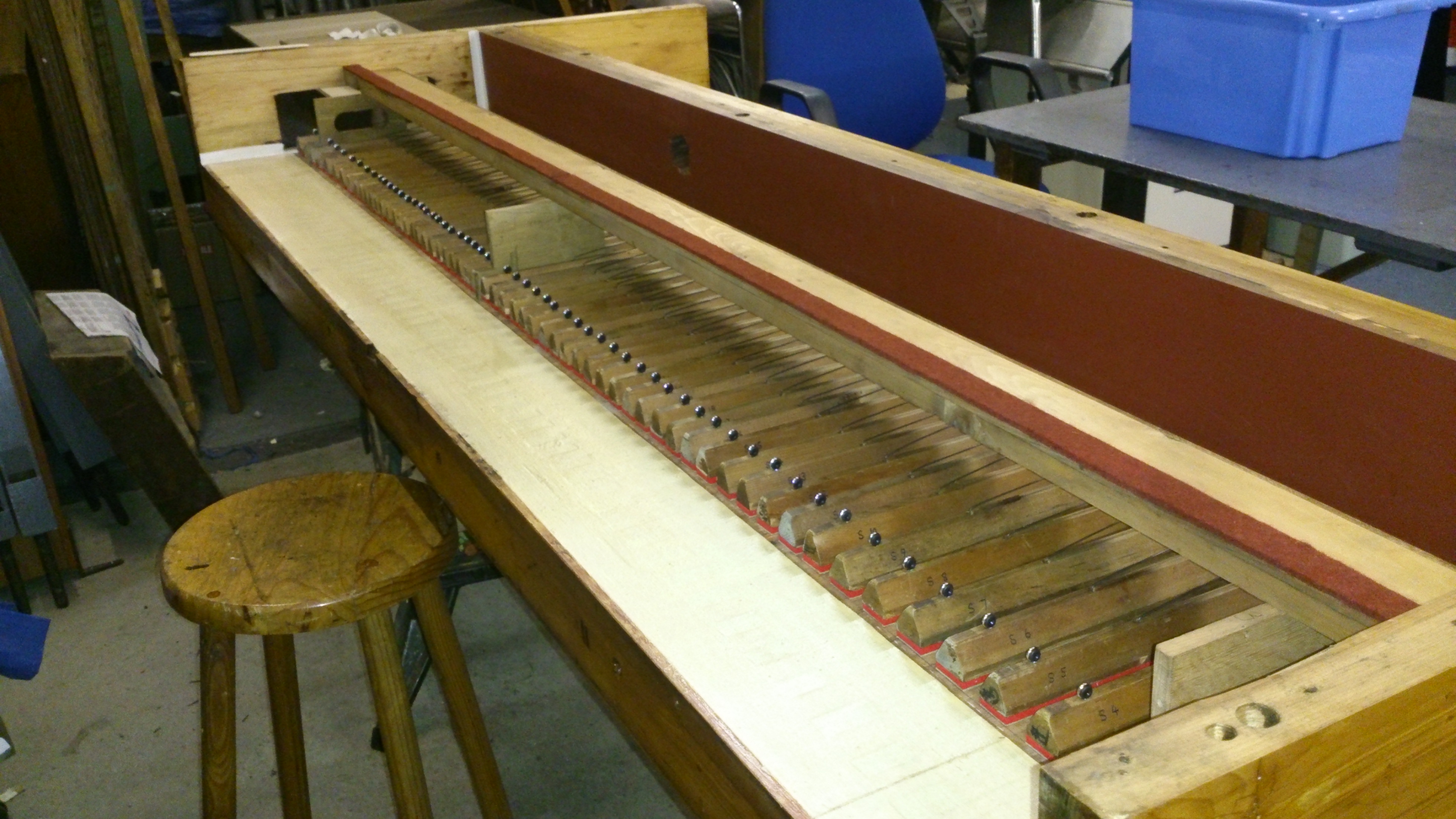
The pallets are fitted to the inside of the Swell windchest

Looking into a rebuilt pedal windchest showing the small bellows motors which control the wind supply to each big pipe
 All Souls Organ