
Home » 2015 (Page 2)
Yearly Archives: 2015
Events since June Pt2
In late June, when work was being done blending the sound of all the pipes in the swell division (in organ builder speak, “regulating”) we discovered that the bottom pipes of the 16′ Bassoon would not sound promptly or properly. These are the only new pipes on the organ, made specially to match the pipes that had come from St Mary’s Leak. In mid-July David Hall, of pipe-makers Booths, came down from Leeds and spent a day working on the pipes with the team from Thompsons.
It turned out that the pipes had been correctly voiced on the correct wind pressure in the factory, so David then had to try to work out what was wrong. Eventually, the conclusion was that the problem was caused by fluctuations in the wind as it moved through the trunking from the bellows. By a clever combination of making minute alterations inside the pipes and increasing the speed of the magnets by a small increase in the power voltage the pipes eventually made to “speak” perfectly as soon as a key was pressed. David then skilfully re-blended them with the other Bassoon pipes and work could then continue on the rest of the Swell.
Events since June – Pt1
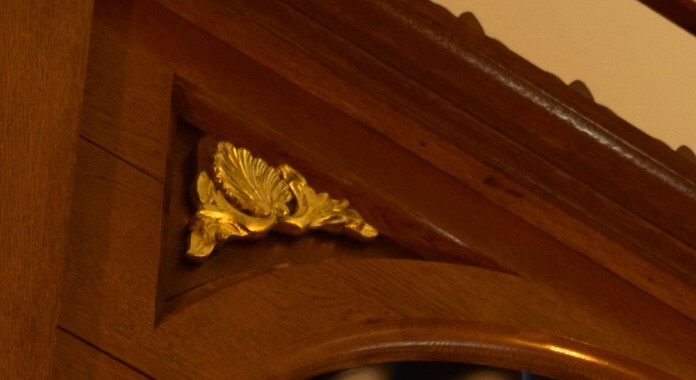
One of the gilded pilgrim shells fitted into the case
It’s been a little time since I last posted any news. That’s because I normally do this late at night, but since June I have spent every free evening making new corner pieces to insert into the empty corner pieces of the casework that were never completed when the original All Souls organ was built just before World War II.
I decided that it would be nice if we could have some gilded carvings to match the other gilding on the case. After some searching, I found some pilgrim shells carved in limewood and got six of them in the right size. I made six backing plates to fit the gaps in the organ case from thin oak-faced plywood and applied wood dye and button polish to the oak veneer until it matched the oak in the case. I then gilded the shells and glued them to the backing plates and fitted them into the organ case.
Gilding has to be carefully timed, so I tend to prepare the surface and apply gilding size just before dinner in the evening. About three hours later it is ready for the gold leaf to be applied, so I tend to start on that around 10.40pm… and finish when the job is done – usually around 12.30pm. The last pieces were fitted in late July.
The last lap is in sight
This week has seen a lot of progress and final tuning and “regulation”(making sure all the pipes are in tune, and that all stops blend together and sound at their best in the Church’s acoustic) begins next week. Virtually all the pipes are now fitted and speaking and the stop motors for the Great are in place and working. Our organ builders have also worked out why our blower motor from our old organ, which was added relatively recently, has always been so noisy. It looks as if its phasing was crossed when it was originally fitted, causing it to run the fan backwards! Now that this has been fixed, it is much quieter. The bass pipes in the pedal need some adjusting so that their “speech” is prompt, but otherwise, they sound fine, and the main part of the Swell mechanism has been fitted and works well.
Next week, in addition to tuning and regulation, the refurbished pedalboard will be fitted, together with the toe pistons, and the Swell mechanism should be completed. The last significant piece of work in the workshop – the construction of the small wind chest for the Great Tierce should also be done and that will be built into the organ case. The target is to have the organ fully playable by the end of June.
More wind!
We were hoping to have the organ playable for Pentecost, but it was not possible. The big Pedal and Great reed pipes (which are on separate wind chests from the rest of the organ) operate on 6″ wind pressure (the rest of the organ is on 3″). In order to achieve that, there has to be a separate bellows reservoir made and fitted which pushes out wind at 6″. That has taken a little longer to make than expected, but is now fitted, together with all the trunking that will take the wind to the relevant wind chests. This has, however, delayed the completion and fitting of the stop motor unit for the Great. Hopefully this week will see this completed and fitted, so that the whole organ can be connected up and “regulating” can begin.
“Regulating” is the tuning and voicing of all of the pipes so that they sound at their best in the building and all blend with each other in tune, which will probably take just over a week. In the meantime, work has started on making the linkage that will enable the swell box doors to open gradually at the press of a pedal. We will be re-using the mechanism from our old organ, but it will need to be adapted as the console will now face the pipes and be built in to the organ, rather than placed away from the pipes and sideways on, as used to be the case.
Back at home, I have now finished stripping all the old paint from the display pipes, buffed them up with wire wool and washed them, ready for spraying with special paint that looks like polished tin. Once that is done, I apply decorative gold leaf to the months.
While I wait for the pipes to be sprayed I will (i) be working on my garden (which has been badly neglected this year! and (ii) making some wooden inserts for six empty spaces on the front of the organ case, staining and polishing them, then fitting and gilding some decorative mouldings that will complete the casework scheme.
Tuning begins!
All the Swell Organ stop motors have been fitted and are now working, so on Friday most of the Swell stops (everything other than the Cornopean, Celeste, Mixture and Bassoon) had their first rough tuning. They sound a lot brighter than they did in the workshop when the Swell division was first built last October – they are gaining a lot from the superb acoustic in the church. Next week, we should have the Great stop motors in and working, and a few software adjustments are to be made before more of the organ will be playable. In addition the reservoir for the wind for the Great Trumpet and the Pedal Trombone has been made and will be fitted. These stops have a separate reservoir as they will work on 6″ wind pressure, whereas the rest of the organ is on 3″.
Back at home, I now only have 3 of the 27 display pipes waiting to be stripped of all paint and washed down – my target is to finish that task by next weekend as the first batch are being sprayed.
Pipes in the Porch
The software has now been ‘signed off’ as being in full working order by our software engineer and all the electric connections now work perfectly. In addition last week the final adjustments were made to the wind trunking, and the bottom octave of the Great Open Diapason 8′ was fitted and connected. The small soundboard for the Great Tierce pipes is being made in the workshop and will be fitted this week together with the Great stop motors. By the end of the week all the Phase 1 ‘working parts’ will have been fitted and tested and the console should be finished off and work can begin on fitting the lower casework.
At home, I have now finished removing at least three layers of old paint off two of the three sets of display pipes and washed them. They are now stacked up in my porch ready for the first set of nine to be taken for painting. The plan is that they will be sprayed in a bright pipe-metal colour by a specialist paint shop in Bromsgrove and by the time they are completed, I will have the final set ready for delivery to them.
When each set returns, I will gild the pipe-mouths, and once all twenty-seven pipes are all done, they will be ready for installation in the completed organ case – which will be the final part of the Phase 1 project.
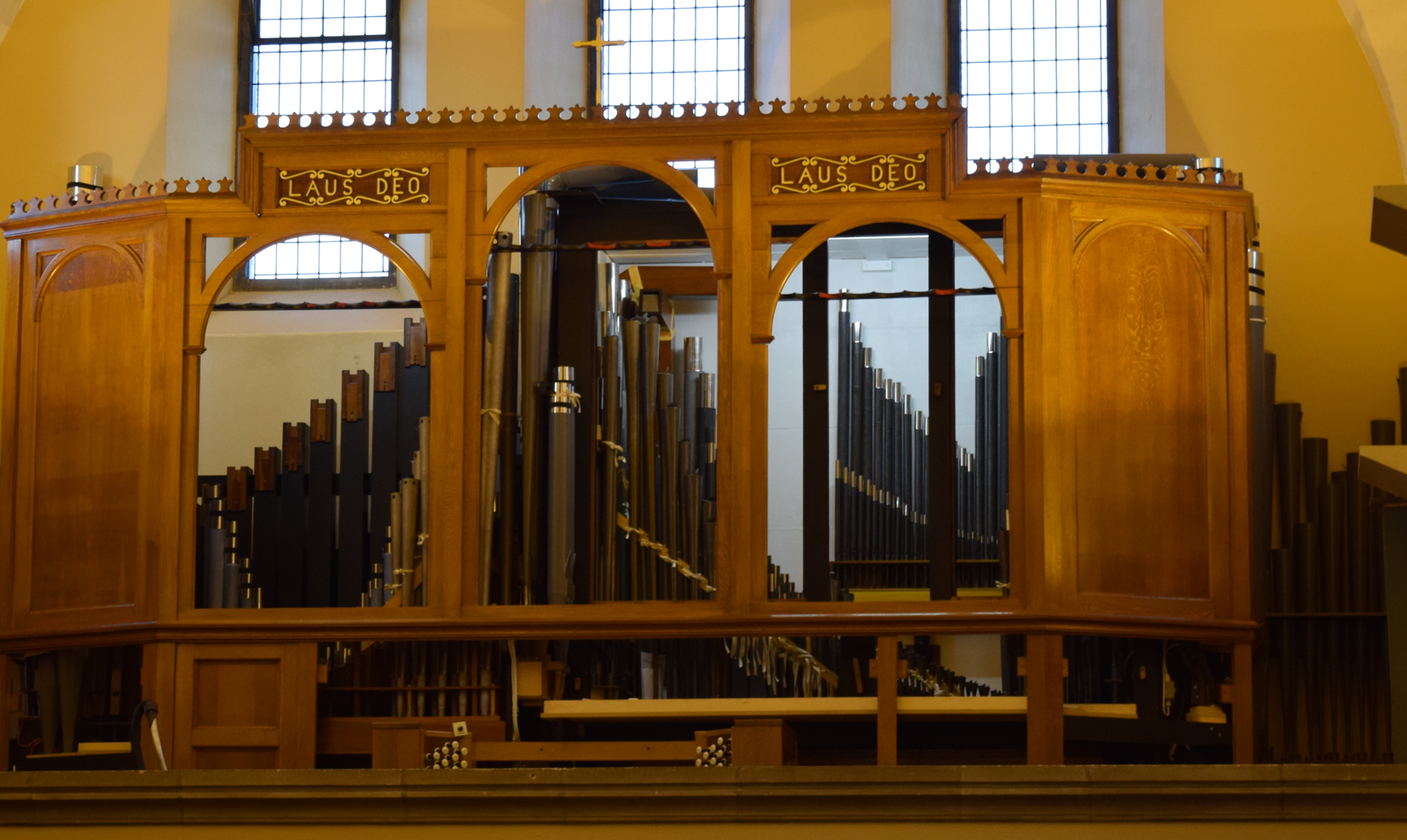
The completed upper case

The bottom pipes of the Great Open Diapason now in place
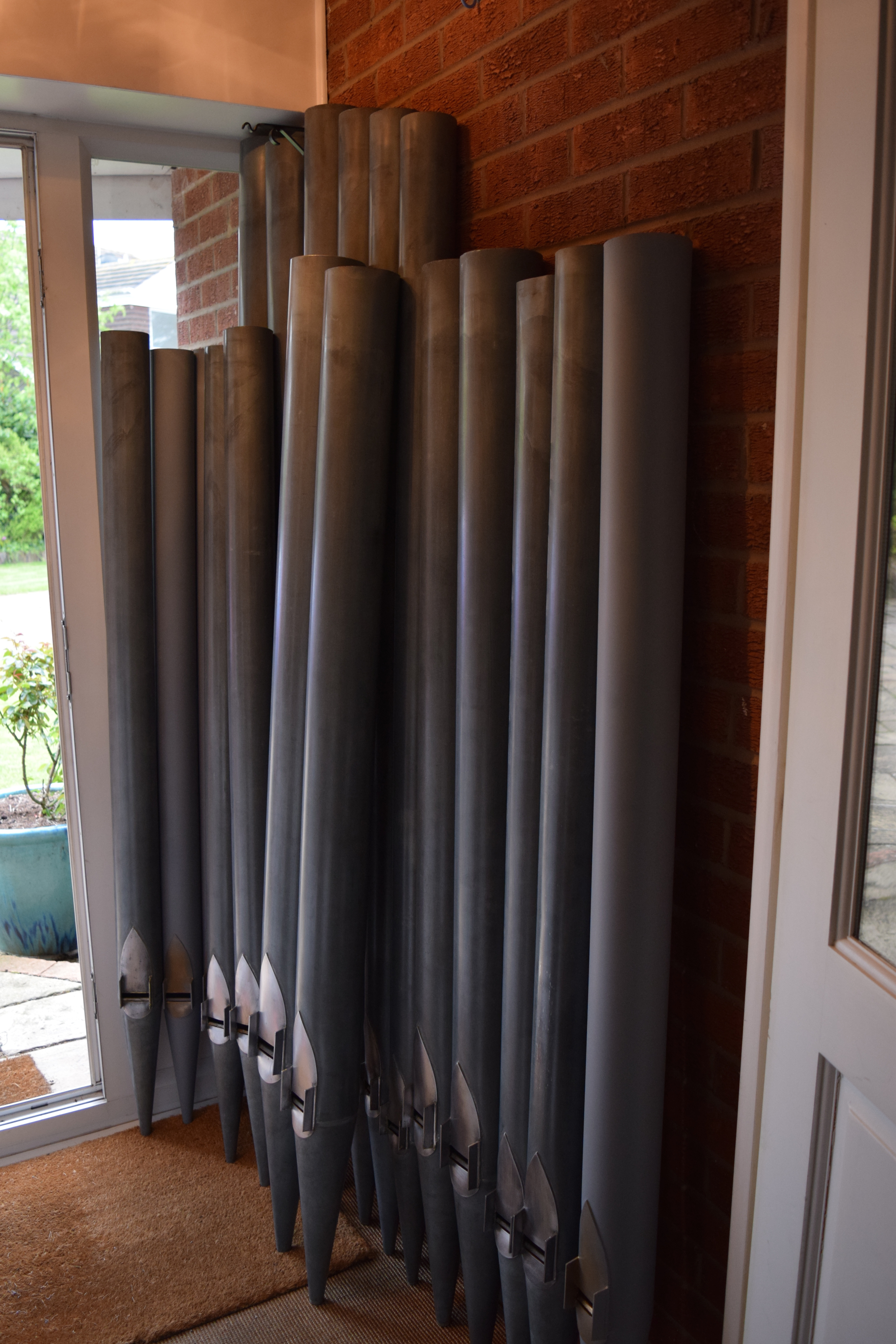
A porch full of pipes!
The organ speaks!

We have sound!
Paul, our electrician, finished wiring all the new circuitry this week and Mike and his team began fitting the bottom pipes of the Great 8′ Open Diapason onto the casework, where they will provide facing pipes on the right and left hand sides. I haven’t seen these pipes before and was amazed at their size – the longest is about 11′ high, which was no surprise, but also about about 9″ in diameter which is large for an open diapason – however, I’m told that they sound terrific!
The console was wired into the circuits and on Thursday night we had the great “switch on”. When the console switch was pressed, both of the blowers and all the internal circuitry came on first time. We then had a little play on the organ using some of the Swell stops. Even though the have not been properly voiced or tuned yet, they sounded pretty good.
The organ bench from Whyke has now returned to Coventry, cleaned up and refurbished. The height adjustment mechanism had seized up whilst it was in store in Chichester before it was given to us, but this now works perfectly. This is all a bit of a luxury for me – I have never had an adjustable bench before. In the past at All Souls we used some wooden blocks!
The gilded cross and panelling for the casework has now been fitted in place. This weekend I will be looking at the rest of the fretwork that will need to be made, gilded and fitted, and returning to the tedious task of stripping several thick layers of old paint from the front display pipes.
Next week, John, our software designer, will be on site to carry out the final tweakings of the stop control software, the rest of the Open Diapason bottom octave will be fitted into the side panels of the case and the blowers will be soundproofed.
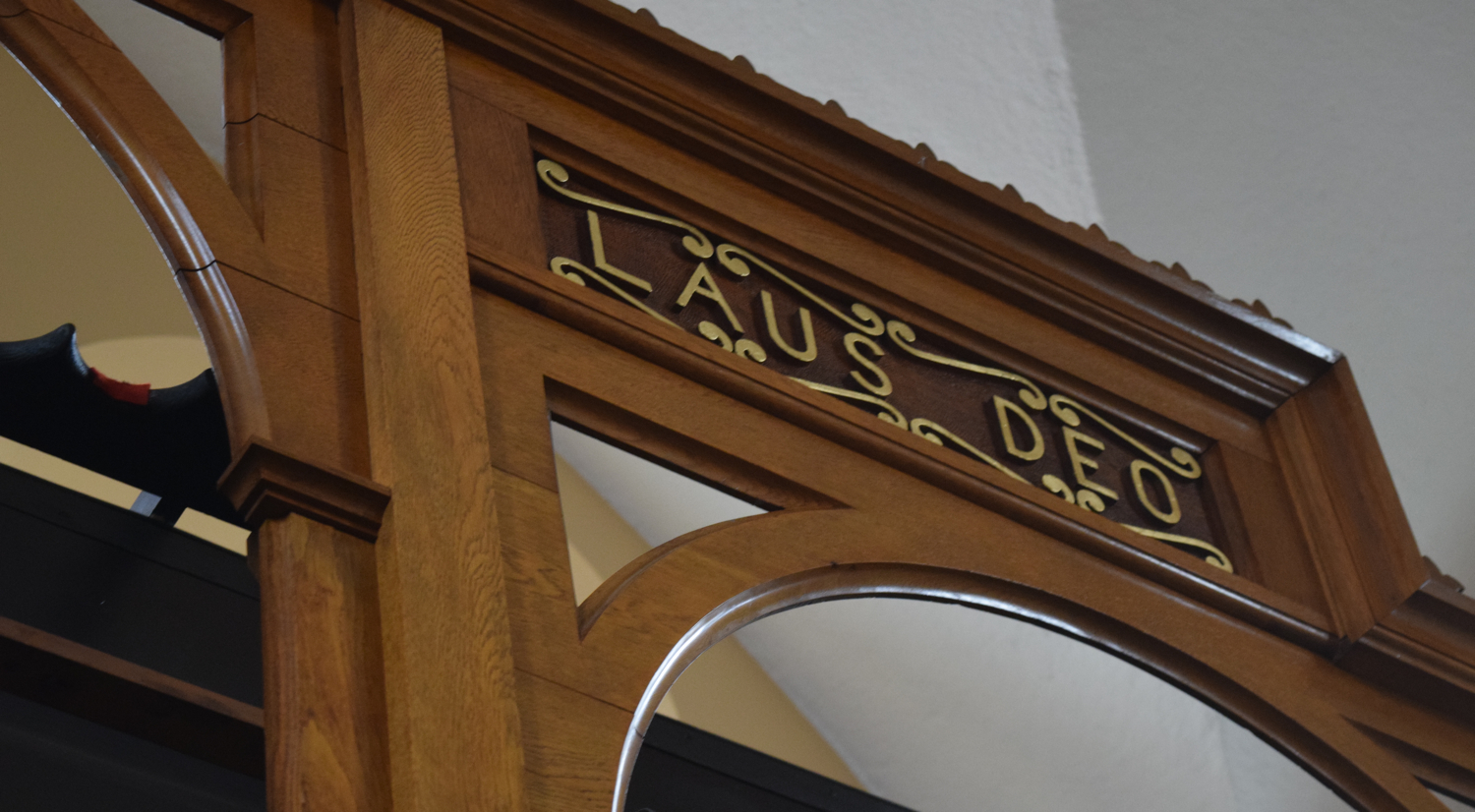
Gilded panel in place

Main casework in place
Sad man on a Sunday
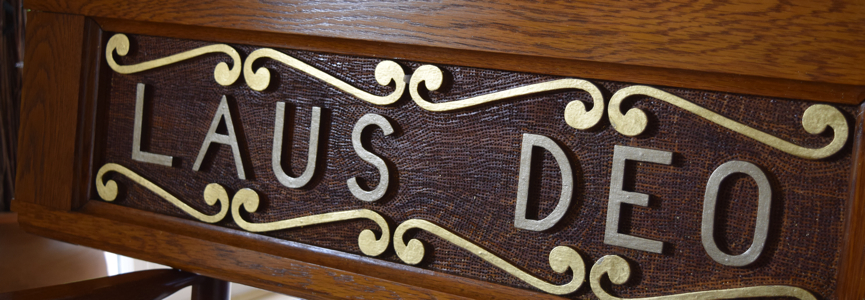
Scrollwork has been gilded, lettering is ready for size to be applied
My wife thought I was going to mow the lawn! Instead I have been gilding the panels of lettering that will go on the front of the organ case. This was originally painted gold when the original organ was built in 1938, but the paint was poor quality and got so tarnished that the lettering was invisible from below. Now that the woodwork has been cleaned and polished up, I am applying 23.5 carat gold leaf to the lettering and scrollwork. This will never tarnish and should last for about 30 years before it will need to be re-done. The gold leaf is rolled to a sheet that is thinner than tissue paper and comes in little booklets. Each figure to be gilded is fine-sanded, painted and shellacked, and then fine-sanded again until it is absolutely smooth. Gilding size is then brushed on and then, several hours later, when the size is touch dry, the gold leave is cut into small pieces of the right shape, using a gilder’s knife and a suede leather cover gilder’s cushion with a draught screen, which prevents the delicate gold leaf from being destroyed by being blown about. The leaf is then stuck to the size and the edges (or ‘skewings’) are brushed away (and saved for patching!) with a sable-haired mop brush. The gold is then burnished with soft cotton wool. It can be lacquered with shellack after that, but this is not necessary for indoors and dulls the gold leaf a bit, so I’m not doing it.
It’s very fiddly work, requiring lots of concentration and a steady hand. Annette says that readers should be very grateful that she did not record any sound!

Cutting the leaf
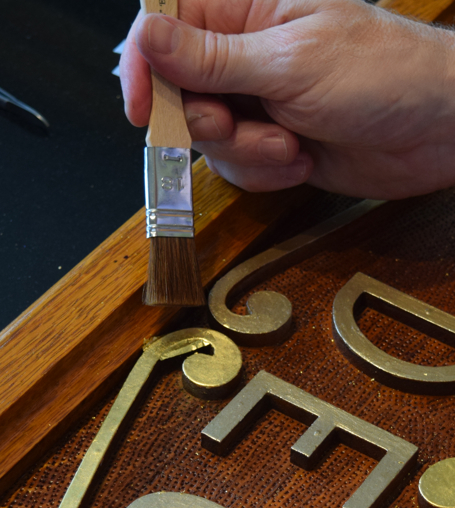
Brushing off the skewings with the mop brush
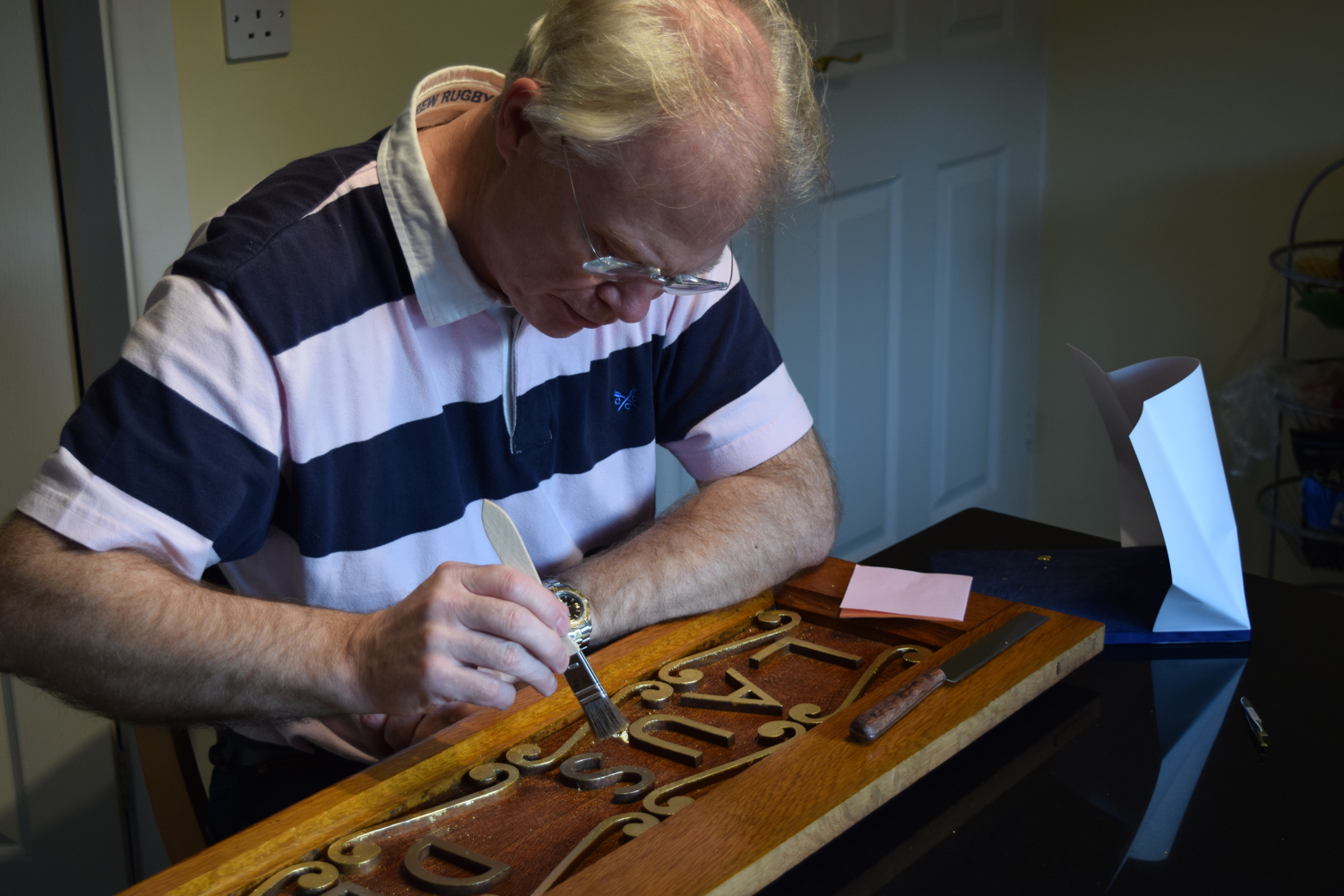
Sad man at work

Brushing out the leaf
The console takes shape
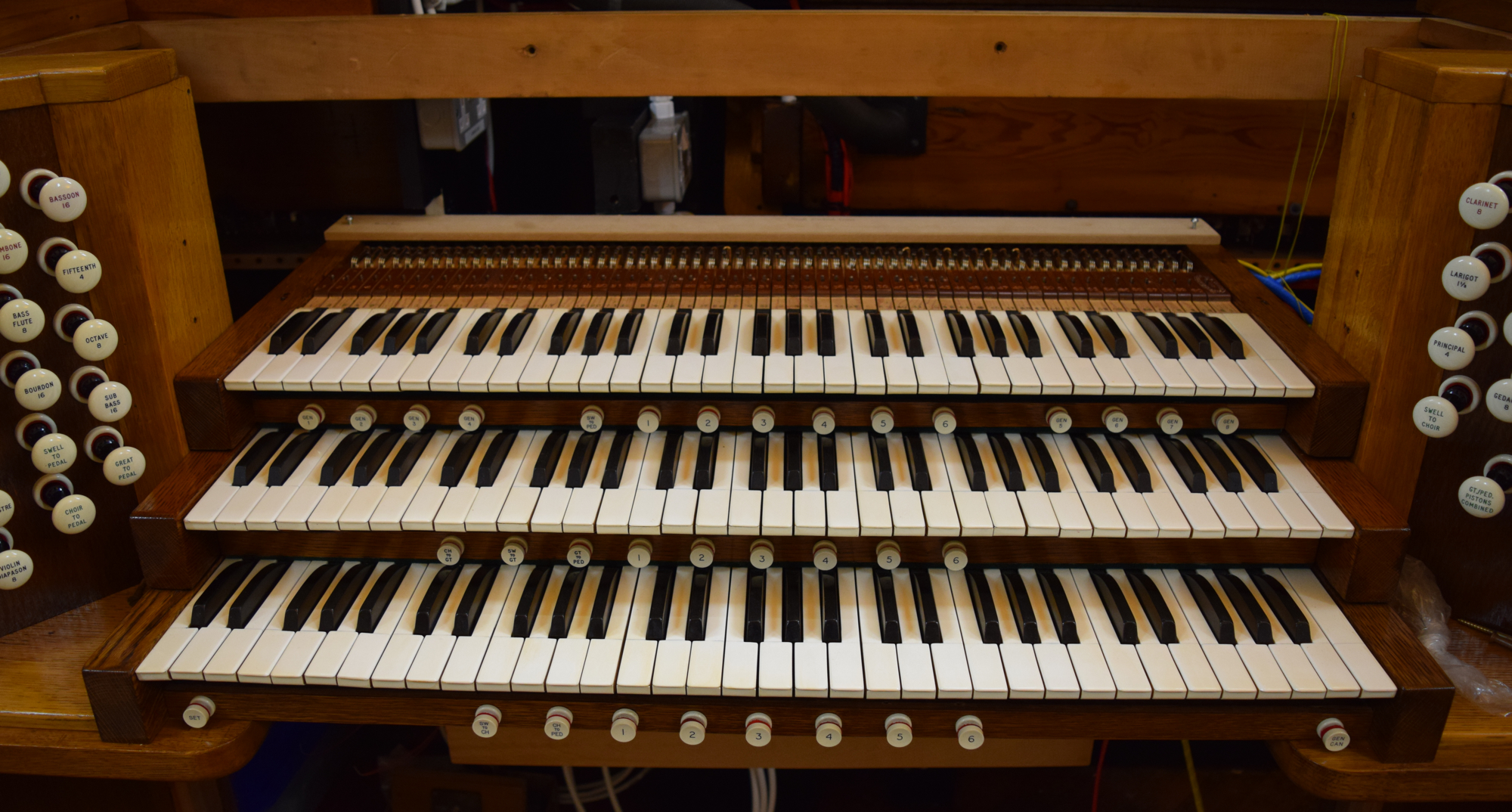
The console (from which the player controls the organ), which was given to us by St George’s Anglican Parish, Whyke, Chichester just over a year ago has now arrived back with us after rebuilding and refurbishing. IT now has 3 manuals (keyboards) and all the stop-knobs for our final specification. Mike and Simon are just finishing off the console wiring before it is connected up to the organ. We now get a much better sense of what the whole job will look like when it is finished.
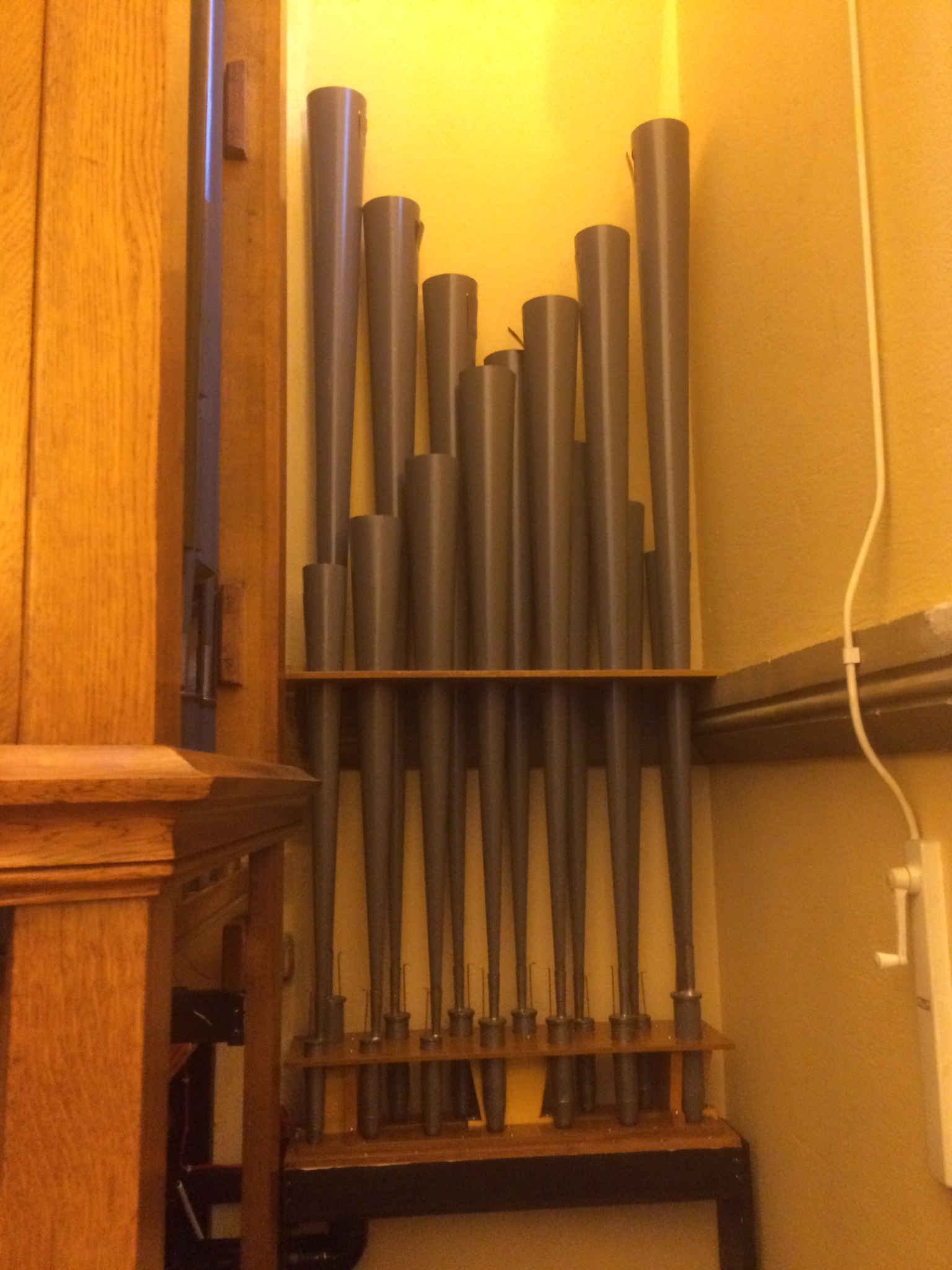
The rest of the trombone pipes
Now that the blowers have been positioned, it has been possible to fit the rest of the pedal 16′ trombone, which is outside the main case in a section which will eventually contain the Choir division and will be concealed from view.
I will be continuing over the weekend with gilding the sections of the organ case that we now know were originally painted gold and stripping paint from the display pipes before they are finally spray-painted and the mouths gilded.

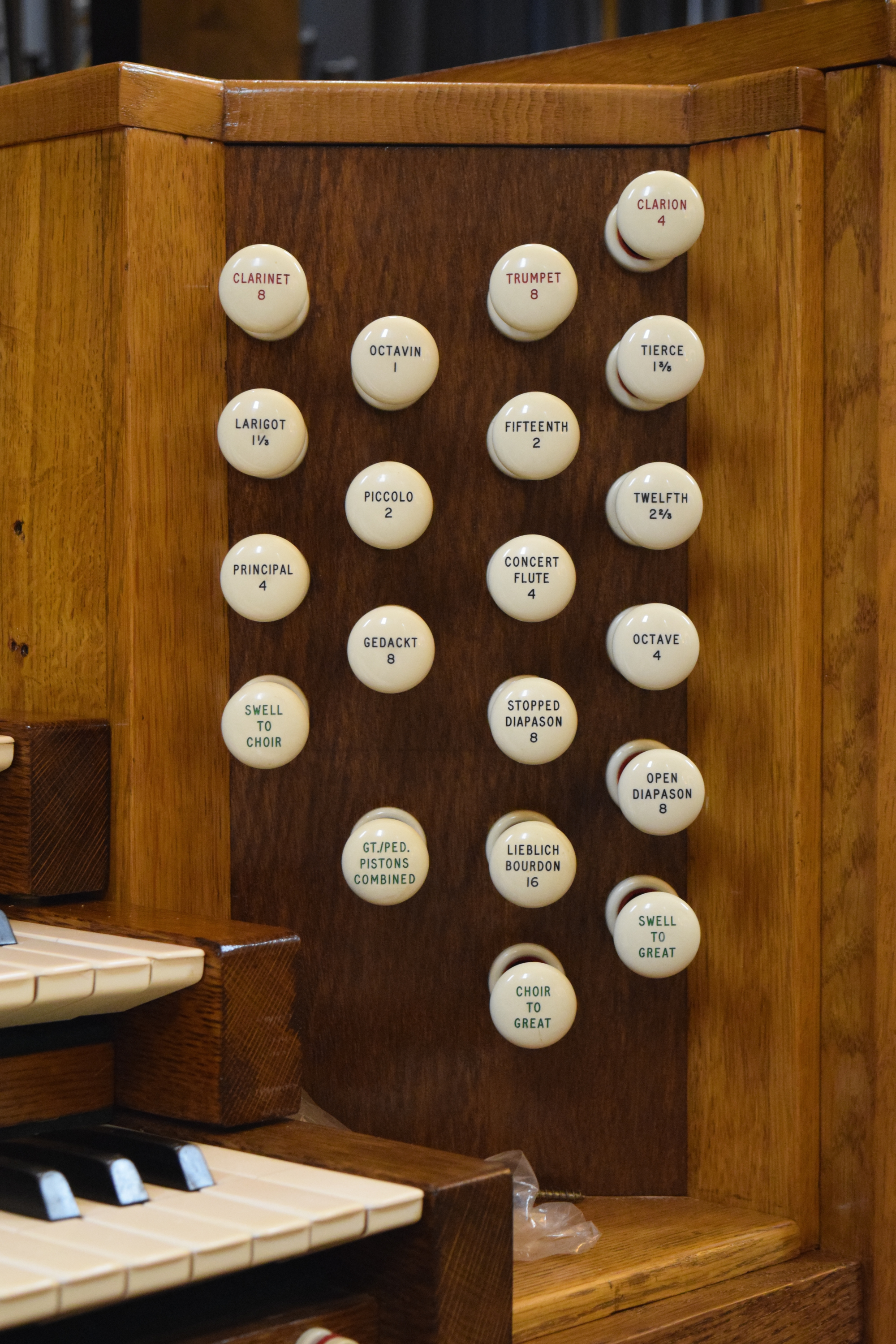
The Swell and Choir stops
Electricity problems solved!
Our church wiring is, in many parts, pretty ancient, but the cabling is very sound, however it is a single phase circuit. We will have two blowers providing wind to the organ. One is single phase, so connects ok, but the other is triple phase (no-one makes suitable single phase blowers any more) and has to have an inverter connected to it to convert the current. The big problem was how to wire everything so that both blowers and all the other electric components on the organ start with a single switch and also avoid having to rewire the whole of the West gallery. Paul, our electrician (who has become an expert at sorting out circuit problems in old churches since he started working at All Souls!) has now cracked it. Thursday was a long day for him and his team, but all the mains wiring is now in place, the blowers are safely wired in, and there are plenty of plug sockets now ready for the console lighting and switching and, eventually, the CCTV system to be plugged in. Now we can get back to organ building!
 All Souls Organ