
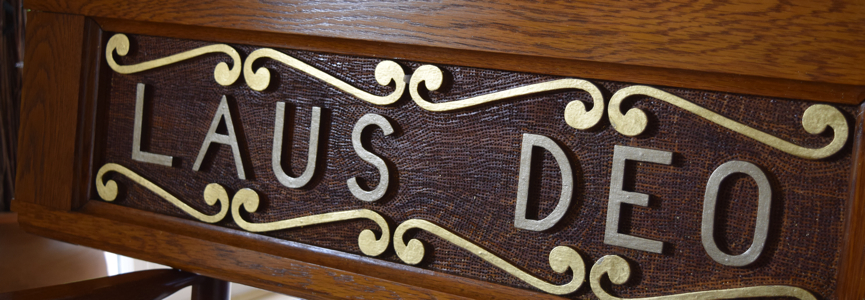
Scrollwork has been gilded, lettering is ready for size to be applied
My wife thought I was going to mow the lawn! Instead I have been gilding the panels of lettering that will go on the front of the organ case. This was originally painted gold when the original organ was built in 1938, but the paint was poor quality and got so tarnished that the lettering was invisible from below. Now that the woodwork has been cleaned and polished up, I am applying 23.5 carat gold leaf to the lettering and scrollwork. This will never tarnish and should last for about 30 years before it will need to be re-done. The gold leaf is rolled to a sheet that is thinner than tissue paper and comes in little booklets. Each figure to be gilded is fine-sanded, painted and shellacked, and then fine-sanded again until it is absolutely smooth. Gilding size is then brushed on and then, several hours later, when the size is touch dry, the gold leave is cut into small pieces of the right shape, using a gilder’s knife and a suede leather cover gilder’s cushion with a draught screen, which prevents the delicate gold leaf from being destroyed by being blown about. The leaf is then stuck to the size and the edges (or ‘skewings’) are brushed away (and saved for patching!) with a sable-haired mop brush. The gold is then burnished with soft cotton wool. It can be lacquered with shellack after that, but this is not necessary for indoors and dulls the gold leaf a bit, so I’m not doing it.
It’s very fiddly work, requiring lots of concentration and a steady hand. Annette says that readers should be very grateful that she did not record any sound!

Cutting the leaf
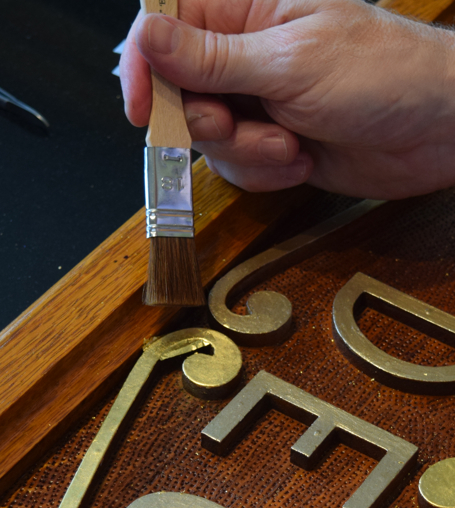
Brushing off the skewings with the mop brush
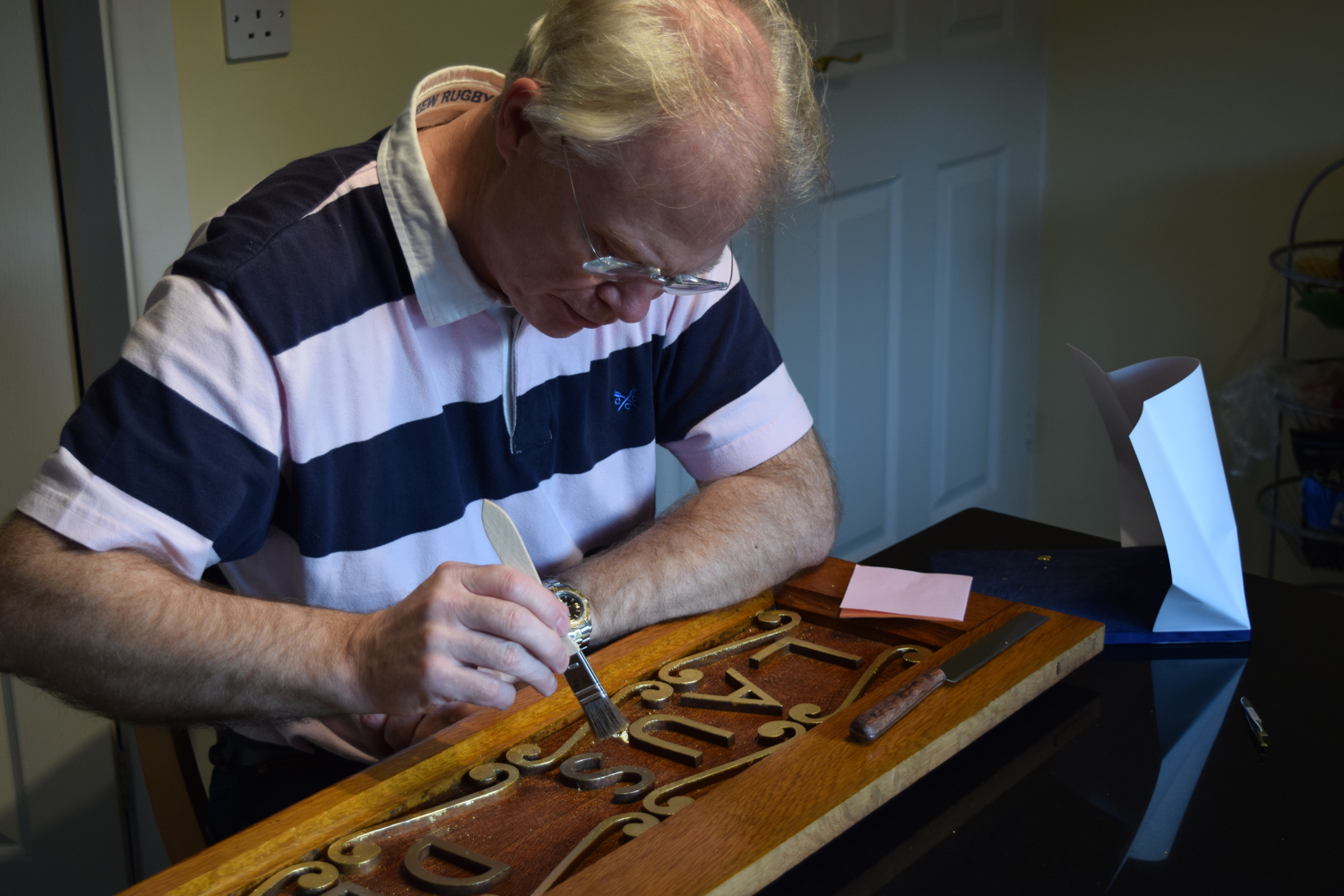
Sad man at work

Brushing out the leaf
 All Souls Organ