
Home » 2015
Yearly Archives: 2015
Awake, O sacred instrument…!
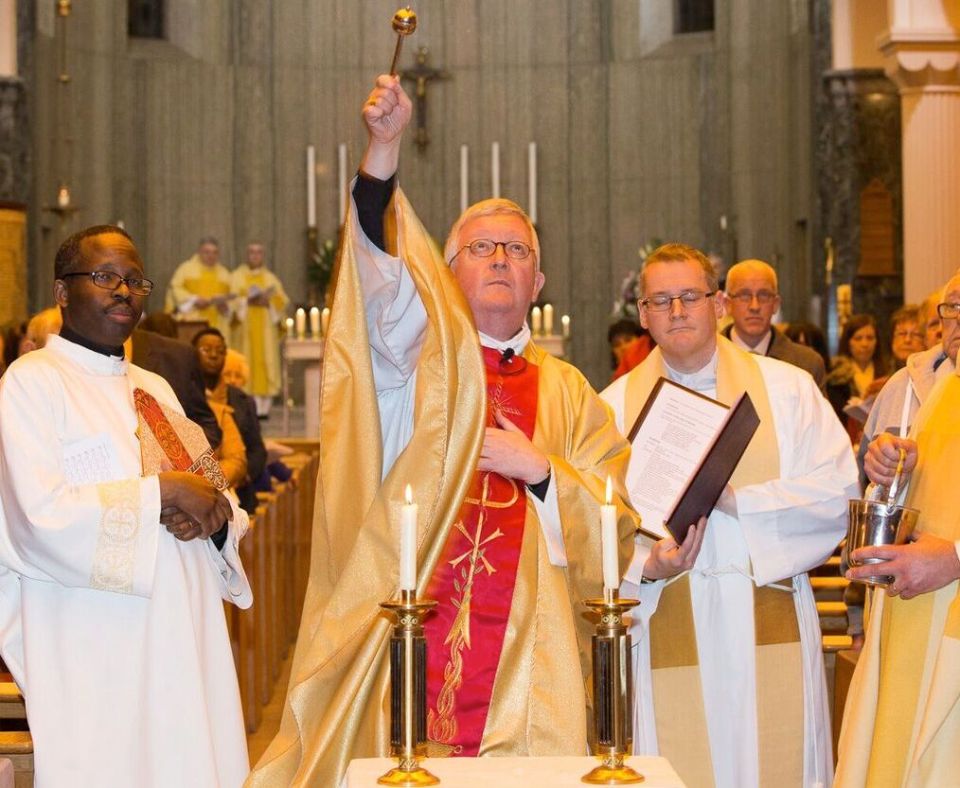 Last night our organ was blessed and dedicated by the Archbishop of Birmingham, the Most Reverend Bernard Longley, at a wonderful Mass concelebrated with the Dean of Coventry, Canon Thomas Farrell and priests and deacons form our arise and city. We were pleased to welcome our organ builder Mike Thompson and his team, who had spent most of the day making sure the organ was fully in tune and ready for the occasion, as well as the choir from our parish school.
The organ’s next “big event” will the its opening recital in the early part of next year, once the tuning has settled down and the organ has “bedded in”.
Tomorrow’s the big day – the organ’s blessing 7pm
The booklets are printed, the psalm is written, the food is organised, and the wine has arrived! The organ is being tuned tomorrow morning, and then all we need is the Archbishop!
The planning continues…
The invitations have been sent, the parishes notified, the liturgy almost planned. The blessing of the organ next Friday (20 November at 7pm) by our Archbishop will be a parish event encompassing all aspects of parish life…and we are really looking forward the the party afterwards! We have been waiting a long time for this – we look forward to seeing as many parishioners and friends as possible to make it another great parish occasion. More details will be provided as the planning continues. Watch this space!
Blessing and dedication of the organ on 20th November
The Archbishop of Birmingham, the Most Reverend Bernard Longley, will bless and dedicate the organ on the evening of Friday 20th November. More details will be provided as soon as they become available.
A busy weekend
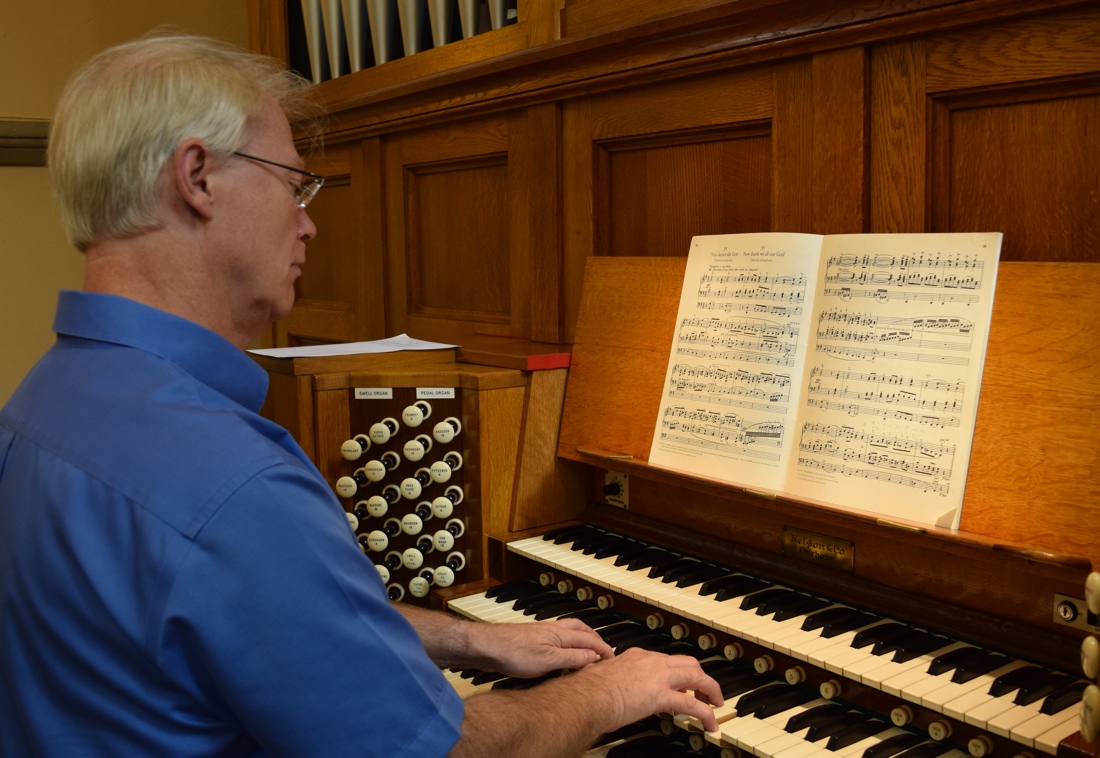
On Friday the organ will receive its first public outing, as Keith demonstrates it to our local christian community at 7.45pm as part of our local ‘How Great Thou Art’ Festival, Visitors will also be able to see the display of ikons set up in church, and any visiting organists will be given the opportunity of putting the organ through its paces.
On Saturday the organ will be back at work accompanying Sung Vespers, which will be one lf the liturgies of the festival, at 5.30pm before its gets back to its regular role accompanying Sunday Mass at 11.15am.
Friday night’s programme: Programme Notes

Ready for action!
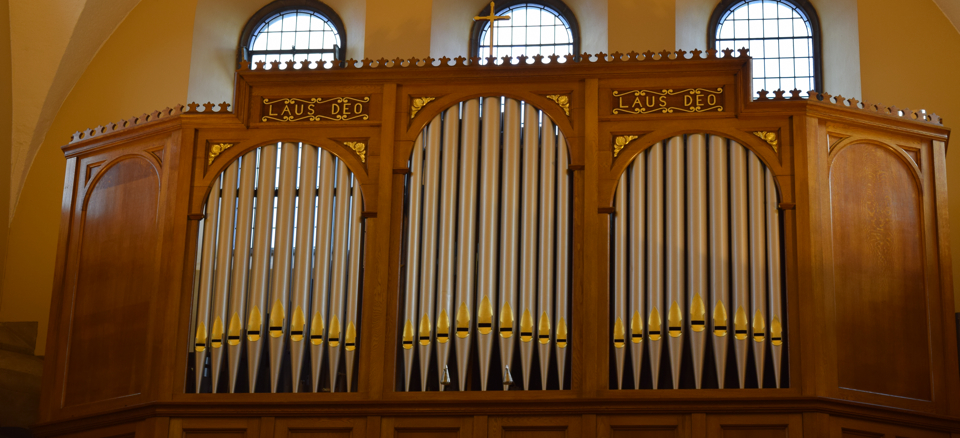
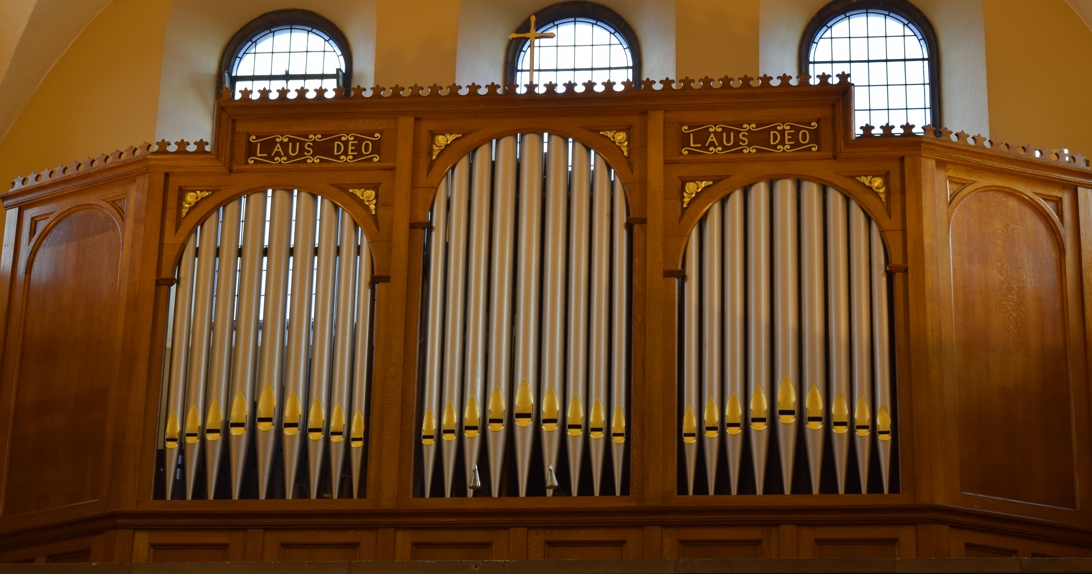
On Tuesday the First Phase of the organ installation was finished. We now have all the restored casework, the refurbished display pipes and all of the organ working, apart from the Choir division (the third keyboard), which will be completed when funds allow. Final ‘handover will be in December when we have its final tuning after a ‘bedding in’ period of a couple of months.
On Friday evening, as part of our Earlsdon and Chapelfields Christian Communities’ Arts Festival, ‘How Great Thou Art’ Keith will be demonstrating the organ and its range of tone at 7.45pm Visitors will be able to hear and see what the organ does and see our display of ikons in the Church.
No more organ parts at home!
For the first time for a year we have no organ parts being worked on at home – I finished gilding the last of the display parts and took them off to All Souls on Sunday afternoon, where they are now waiting to be installed alongside the centre pipes which I fitted on Saturday.


The last batch in our hall waiting to be loaded
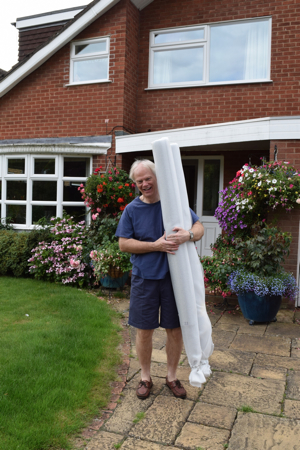
Sad man with pipes
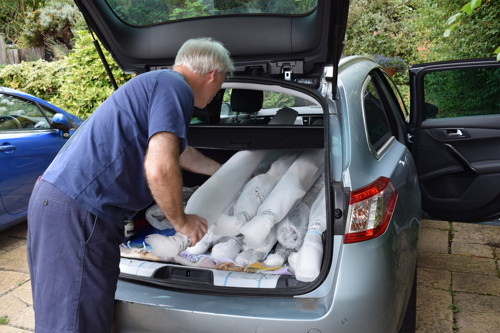
Loading up!
And they’re off!
It’s all working!
Last Sunday we had the organ in full working order for the first time. There is still some fine-tuning and blending to be done and the keyboards will be re-balanced to ensure that the touch is completely even, but we are in action. To celebrate, I played the Dubois Toccata at the end of Mass.
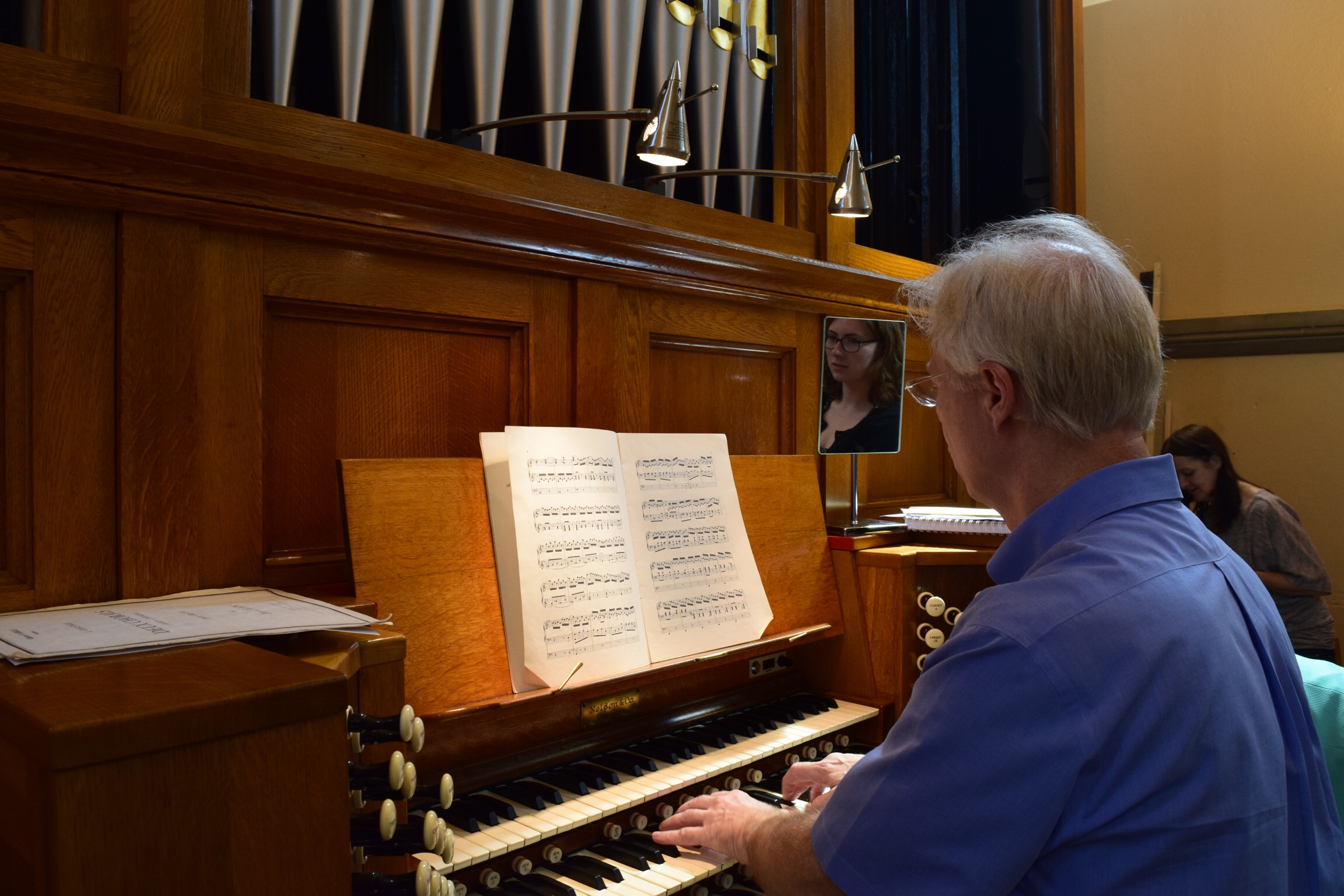
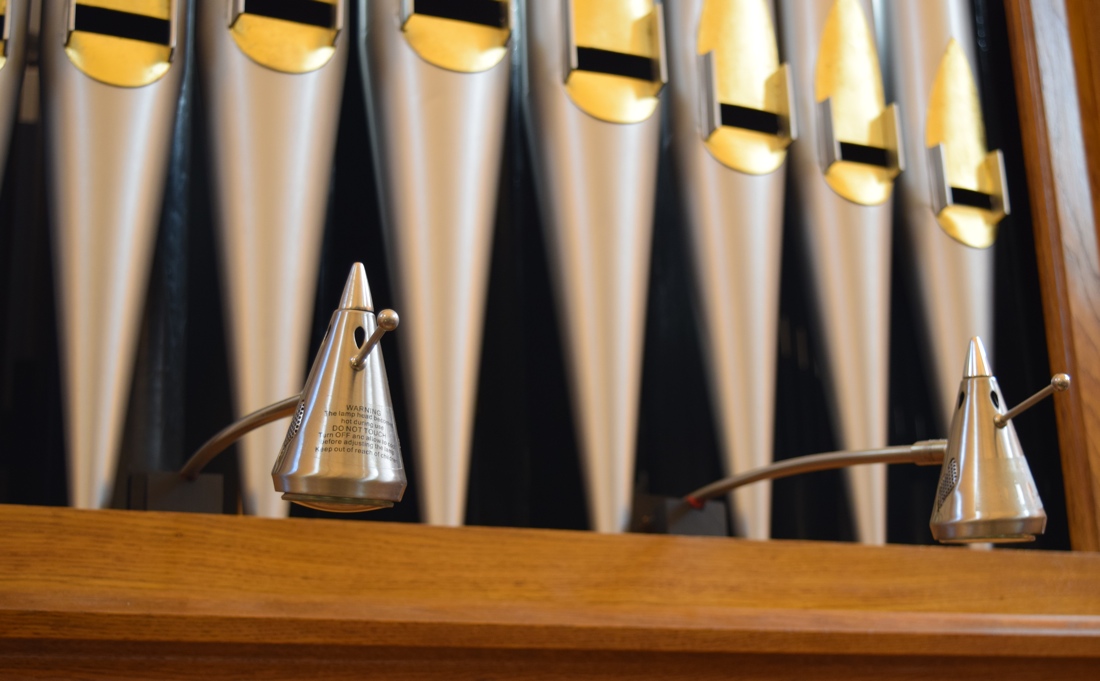
The Dubois Toccata getting an airing with Emily in the mirror (she was page-turning!) and Gabby clearing up music after Mass. Note the mirror (no expense spared – £15 from Homebase) and the state of the art console lights (2 halogen desk lamps bought from Homebase in 2009 and re-engineered by me – saving over £300!).
wesprayanything.com – and they do!

wesprayanything.com
The front display pipes on our old organ are being re-used in the new one. Although they are real organ pipes, they are not connected to the wind and make no sound. They were in a terrible state, with at least 3 thick layers of paint (originally “gold” – then 2 layers of aluminium, all painted by brush, with obvious brush strokes and without the pipes being taken out). After some debate, the only solution was to take out all 27 pipes (some of which are over 10 foot long), strip the paint off by hand, clean them with wire wool and white spirit, and then have them refurbished and painted. Emily and I started taking the pipes out in August last year and I brought them home (some stored in my garage, and some in my mother’s garage!).
Bit by bit I cleaned each pipe (gallons of Nitromors!) and polished it up (that takes over 2 hours per pipe). After various trials, it was obvious that they would be best sprayed silver, with the mouths properly gilded with gold leaf (the traditional way of decorating display pipes). My spraying skills are negligible and I don’t have a spray booth, so I had to get someone to do it. I thought about getting a car bodyshop involved, and then came the Budget! On budget night the BBC local news featured a small paint spraying business in Bromsgrove (“wesprayanything.com”) and looked at how it would be affected by the Chancellor’s latest efforts. We might have found our solution – so I took a couple of pipes down to Bromsgrove. Organ pipes were something new to Paul and his team, but they were not daunted and after an hour or so, we had agreed on a colour and finish. Paul agreed to do a trial pipe and emailed photos of it to me. The colour was perfect, so we decided to try a matt polyurethane finish, but when I went down to see it, it was too dull. We then tried a sheen finish and I was happy – so during July, the pipes were taken down to Bromsgrove in batches of 9 and sprayed before coming back to my house in August for gilding.
Problems with the Mixture
A mixture is an organ stop where more than one pipe sounds for each note. On our organ there is a 3 rank mixture on the Swell division – so 3 pipes speak when each key is pressed. Each rank sounds at a different (and high!) pitch so that a blend of harmonics can be added to the chorus of pipes when stops are drawn.
Our mixture has pipes pitched at seventeenth (i.e. the bottom pipe sounds E above middle C), nineteenth (G above middle C) and twenty-second (C an octave above middle C). As you move up the keyboard, the pipes get smaller and shriller and the sound can get unpleasant (and eventually, if nothing was done, they would be pitched so high that the human ear cannot hear them).
The solution is to have each rank “break back” at different points in the range so that at the point where the rank “breaks” it is re-set with lower pitched pipes, and the pipes start longer and get smaller as they go up. Another trick, in blending the ranks to get the best “silvery” sound from the mixture, is to change the pitching of the rank.
On our mixture, we hit a real problem when it was being voiced. In the section about an octave above middle C, one of the ranks was much too dominant and produced a very shrill, and to my ears unpleasant sound. Mike and Simon eventually concluded that the best “fix” was to replace the offending pipes with slightly wider pipes tuned to the fifteenth, which had the effect of slightly lowering the pitch of that part of the mixture and giving a gentler and more pleasant sound. They used some of the small pipes from our old organ from a stop that was not useable as a complete stop, and then the pipes were cut down so that they sounded at a much higher pitch that used to be the case. Eventually, with skilful tuning and voicing (making minute alterations to the pipes) the whole of the Swell division now blends perfectly.
 All Souls Organ